
Author Archives: superadmin

Preschool Admissions in Ahmedabad: How to Prepare for a Hassle-Free Experience

Preschool Admissions

Preschool Admissions

Choosing a preschool is one of the first important educational decisions parents make for their children. It is an exciting milestone, but the admission process can sometimes feel confusing, especially for first-time parents. From understanding age requirements and visiting campuses to preparing documents and completing registration, a little planning can make the experience easier. Whether you are exploring different schools or preparing to submit an application, understanding the Preschool Admissions process can help you choose a learning environment where your child feels safe, comfortable and encouraged to grow.

1. Start Your Preschool Search Early

Beginning your search early gives you enough time to compare schools, understand admission requirements and visit campuses without rushing.

Ideally, start researching several months before the expected admission period.

During your initial search, consider:

  • Distance between the school and your home.
  • School timings and daily schedules.
  • Available preschool programmes.
  • Classroom environment and facilities.
  • Teacher experience and qualifications.
  • Admission dates and application procedures.

Preparing a shortlist of suitable schools can make comparisons easier and help you avoid last-minute decisions.

2. Understand the Age and Admission Requirements

Every preschool may have its own admission policy and age criteria for different programmes. Parents should check the school’s current requirements before applying.

Some important questions to ask include:

  • What is the minimum age for admission?
  • Which programmes are available for younger children?
  • Is toilet training required?
  • Are there specific admission dates?
  • Does the school conduct an interaction with parents or children?
  • Are there any additional eligibility requirements?

Do not assume that every preschool follows the same admission rules. Confirm the details directly with the institution.

3. Visit the Campus Before Making a Decision

A campus visit gives parents a better understanding of the environment where their child will spend time each day.

When visiting a Best Preschool In Ahmedabad, look beyond attractive classrooms and decorations. Pay attention to how children interact with teachers and how daily activities are organised.

Check the following:

  • Are classrooms clean, organised and child-friendly?
  • Is the furniture suitable for young children?
  • Are indoor and outdoor play areas available?
  • Do teachers interact patiently with children?
  • Are safety and hygiene practices maintained?
  • Does the environment feel welcoming?

If possible, visit during regular school hours to observe the atmosphere and classroom interactions.

4. Understand the Curriculum and Learning Approach

Preschool is not simply about teaching alphabets, numbers and colours. Early education should help children develop communication, confidence, independence and social skills.

Ask the school about its learning approach and daily activities.

A balanced preschool programme may include:

  • Storytelling and picture-book activities.
  • Music, movement and rhymes.
  • Drawing, colouring and hands-on activities.
  • Early number and letter recognition.
  • Group games and interaction.
  • Outdoor play and physical activities.

Children learn at different speeds, so the learning environment should encourage curiosity without creating unnecessary academic pressure.

5. Check Teacher Experience and Classroom Attention

Teachers have a major influence on a child’s first experience of school. Young children need patient guidance, encouragement and individual attention while adjusting to a new environment.

Before completing admission, ask about:

  • Teacher qualifications and experience.
  • Number of children in each classroom.
  • Teacher-to-child ratio.
  • Staff training and child-care practices.
  • How teachers handle separation anxiety.
  • How parents receive updates about their child’s progress.

A supportive teacher can help children feel comfortable, participate in activities and gradually develop confidence.

6. Prepare the Required Admission Documents

One practical way to avoid delays is to organise the necessary documents before starting the application process.

Although requirements vary between schools, parents may commonly be asked for:

  • Child’s birth certificate.
  • Recent passport-size photographs.
  • Parent or guardian identification documents.
  • Residential address proof.
  • Previous school records, if applicable.
  • Completed admission application form.

Keep digital and physical copies of the documents ready. Confirm the exact list with the school because additional requirements may apply.

7. Understand Fees, Timings and School Policies

Before confirming admission, make sure you understand the financial and practical commitments involved.

When comparing a Pre School In Ahmedabad, ask for a clear explanation of:

  • Registration and admission fees.
  • Monthly or term-wise tuition fees.
  • Transportation charges, if applicable.
  • Uniform and learning-material expenses.
  • Meal arrangements.
  • School timings and holidays.
  • Refund and withdrawal policies.

It is also important to understand the school’s absence policy, pick-up arrangements and communication procedures. Knowing these details beforehand can prevent misunderstandings later.

8. Help Your Child Prepare for the First Day

Admission is only the beginning. Starting preschool can be a big emotional change for a young child, particularly if they have mostly spent time at home.

Parents can make the transition easier through small, everyday steps:

  • Talk positively about school and the activities children may enjoy.
  • Establish a regular sleep and morning routine.
  • Encourage simple independent tasks, such as putting away toys.
  • Allow your child to become familiar with their school bag and belongings.
  • Practise short periods of separation when appropriate.
  • Listen patiently if your child expresses nervousness.

Some children settle in quickly, while others need more time. Avoid comparing your child’s adjustment with that of other children.

Conclusion

A smooth preschool admission experience begins with careful research and early preparation. Parents should compare learning programmes, visit campuses, understand admission requirements, review fees and evaluate teacher support before making a decision. Just as importantly, preparing children emotionally can help them feel more comfortable during their first days at school.

When selecting a School In Ahmedabad, focus on finding an environment that supports your child’s individual development, encourages curiosity and makes learning enjoyable. A thoughtful choice can give your little one a happy and confident beginning to their educational journey.

Frequently Asked Question

1. When should parents start applying for preschool admission?

It is helpful to begin researching schools several months before the expected admission period. This gives parents enough time to visit campuses, compare programmes and complete applications.

2. What documents are generally required for preschool admission?

Common documents include the child’s birth certificate, photographs, parent identification and address proof. Requirements differ, so confirm the list with the selected school.

3. Do children need to know alphabets and numbers before joining preschool?

No. Preschool is designed to introduce foundational concepts gradually. Children do not need to master letters or numbers before admission.

4. How can parents help a child who is nervous about starting school?

Introduce the idea of school positively, establish a familiar routine and allow the child time to adjust. Regular communication with teachers can also help.

5. What should parents check before paying admission fees?

Review the fee structure, refund policy, school timings, transportation arrangements, facilities and admission terms before making payment.
 

Beyond ABCs: What Makes a Preschool a Great Starting Point for Young Learners in Jodhpur Ahmedabad?


Preschool in Jodhpur Ahmedabad

A child’s early years are filled with curiosity, discovery and important first experiences. Preschool is often where children begin learning how to interact with others, express their thoughts, follow simple routines and explore the world beyond home. Choosing the right environment can make this transition more comfortable for both children and parents. If you are considering a Preschool in Jodhpur Ahmedabad, look beyond colourful classrooms and basic alphabet lessons. A good preschool should support a child’s emotional, social, physical and cognitive development while making everyday learning enjoyable.

1. A Warm and Welcoming Learning Environment

For many children, preschool is their first experience of spending time away from family. The environment should therefore feel safe, friendly and welcoming.

When visiting a preschool, observe whether:

  • Classrooms are clean, organised and suitable for young children.
  • Learning materials are accessible and age-appropriate.
  • Children appear comfortable approaching teachers.
  • There is enough space for indoor and outdoor activities.
  • The overall atmosphere feels calm, positive and encouraging.

A welcoming setting can help children gradually become familiar with their surroundings and develop confidence in a new routine.

2. Caring and Trained Teachers

Teachers play a major role in shaping a child’s early learning experience. At this age, children need patience, encouragement and individual attention rather than constant instructions or pressure.

Look for educators who:

  • Understand the developmental needs of young children.
  • Communicate in a gentle and age-appropriate manner.
  • Encourage children to ask questions and express themselves.
  • Handle disagreements and emotional moments patiently.
  • Give parents regular updates about a child’s progress.

It is also useful to ask about teacher qualifications, experience and the number of children assigned to each educator.

3. Learning Through Play and Exploration

Young children naturally learn by touching, observing, asking questions and trying things themselves. A preschool should provide opportunities for exploration instead of focusing only on memorising letters and numbers.

A balanced programme may include:

  • Building blocks, puzzles and sorting activities.
  • Storytelling, picture books and conversation.
  • Music, movement and simple games.
  • Drawing, colouring and craft activities.
  • Nature observation and hands-on exploration.

These experiences can introduce early concepts such as shapes, colours, patterns and numbers while helping children develop curiosity and problem-solving skills.

4. Focus on Social and Emotional Development

Preschool is not just about academic readiness. It is also where children begin learning how to share, cooperate, communicate and understand their feelings.

A supportive Pre School In Ahmedabad should encourage children to develop important social and emotional skills through everyday interactions.

For example, children can learn to:

  • Take turns during group activities.
  • Share toys and learning materials.
  • Express their needs and feelings.
  • Listen when someone else is speaking.
  • Participate in group play and simple tasks.

Teachers should guide children through these experiences with patience. Every child develops at a different pace, so comparisons and unnecessary pressure should be avoided.

5. Age-Appropriate Curriculum and Activities

A good preschool programme introduces foundational skills in a way that matches children’s developmental stages. The focus should be on gradual progress rather than expecting every child to achieve the same results at the same time.

Before enrolling your child, ask about:

  • Language and communication activities.
  • Early number and shape recognition.
  • Fine motor activities, such as holding crayons and handling objects.
  • Physical movement and coordination.
  • Opportunities for independent tasks and decision-making.

A well-rounded curriculum balances guided activities with free play, giving children enough time to learn and explore naturally.

6. Hygiene, Safety and Child-Friendly Facilities

Parents should feel confident that their child is spending time in a clean and appropriately supervised environment. Safety arrangements are especially important for younger children who are still learning to recognise risks.

Check whether the preschool maintains:

  • Clean classrooms, toilets and play areas.
  • Safe furniture and age-appropriate equipment.
  • Secure entry and exit arrangements.
  • Appropriate supervision during activities.
  • Clear procedures for illness, injuries and emergencies.

Ask about the school’s policies for authorised pick-up, visitor access and communication with parents. These practical details can help families understand how children’s safety is managed.

7. Parent-Teacher Communication and Involvement

A child’s development continues at home, so communication between parents and teachers is valuable. Regular conversations can help families understand what their child enjoys, where they may need support and how they are adjusting to preschool.

Look for a school that:

  • Shares meaningful updates about children’s activities.
  • Discusses developmental progress with parents.
  • Listens to parental concerns.
  • Provides guidance on building simple learning habits at home.
  • Maintains clear communication about events and daily routines.

When parents and teachers work together, children can receive more consistent encouragement across home and school environments.

8. Preparing Children for Their Next Educational Stage

Preschool should help children become comfortable with learning, routines and group participation. These early experiences can make the transition to formal schooling easier.

When comparing options, including Top Schools In Ahmedabad, consider whether the preschool helps children build:

  • Confidence in communicating with others.
  • Basic listening and attention skills.
  • Independence in simple everyday tasks.
  • Curiosity and a positive attitude towards learning.
  • The ability to participate in group activities.

The aim is not to rush children into formal academics. It is to help them develop the confidence and foundational skills they will gradually use in later years.

Frequently Asked Questions (FAQs)

1. What is the right age to start preschool?

The appropriate age depends on a child’s development, readiness and family circumstances. Many children begin preschool around two-and-a-half to three years of age, but parents should discuss individual needs with the school.

2. How can I know if my child is ready for preschool?

Signs may include curiosity about new activities, interest in playing with other children and some comfort with short periods away from parents. Readiness varies, and children do not need to have mastered every independent skill before joining.

3. What should I check during a preschool visit?

Observe classroom cleanliness, teacher-child interactions, safety arrangements, learning materials, play facilities and the overall atmosphere. Ask about the curriculum, daily schedule and parent communication.

4. Is play-based learning important in preschool?

Yes. Play gives young children opportunities to explore ideas, practise communication, develop coordination and learn social skills. It can make foundational learning more engaging and appropriate for their age.

5. How can parents help children adjust to preschool?

Establish a predictable morning routine, talk positively about school, allow time for adjustment and listen to your child’s feelings. Staying in regular contact with teachers can also help address concerns.

Conclusion

A great preschool gives children more than an introduction to letters, numbers and classroom routines. It offers a caring environment where they can explore, make friends, develop independence and become comfortable with new experiences. Parents should consider teacher quality, learning methods, safety, communication and opportunities for overall development before making a decision.

When evaluating a School In Ahmedabad, remember that the best choice is one that respects your child’s individual pace and makes learning a positive experience. A thoughtful start can help build the confidence, curiosity and foundational skills children carry into the next stage of their education.

How Creative Play and Meaningful Learning Support Early Childhood Development at a Preschool in Satellite


Preschool in Satellite

A child’s first educational experiences can shape their attitude towards learning for years to come. During the preschool stage, children begin developing communication skills, emotional awareness, coordination, and the confidence to explore unfamiliar situations. Choosing a Preschool in Satellite therefore involves more than comparing facilities or daily schedules. Parents should understand how a school encourages curiosity, supports individual development, and creates a positive environment for discovery. Ananda Global School provides a starting point for families exploring early education and considering what makes a learning environment suitable for their child’s needs.

1. Why the Early Years Need a Different Approach to Learning

Young children learn differently from older students. They understand ideas through movement, observation, repetition, conversation, and hands-on experiences. Activities that appear simple, such as arranging objects by size or describing a picture, can strengthen several developmental abilities at once.

An effective preschool programme balances guided learning with opportunities for independent exploration. Instead of expecting children to memorise information for extended periods, educators can introduce concepts through stories, games, music, creative activities, and everyday classroom interactions.

This approach supports several important areas of development:

  • Language and communication: Listening, expressing needs, describing experiences, and learning new vocabulary.
  • Early reasoning: Recognising patterns, comparing objects, and finding solutions to simple problems.
  • Physical coordination: Developing balance, movement, and control through age-appropriate activities.
  • Emotional awareness: Identifying feelings and gradually learning how to manage frustration.
  • Social development: Sharing resources, cooperating with peers, and understanding group routines.

Progress may look different for every child. A supportive classroom recognises these differences while providing opportunities for steady growth.

2. What to Evaluate When Comparing Educational Options

Parents exploring the Top Schools In Ahmedabad should examine the educational experience behind the facilities. Attractive classrooms can be inviting, but the quality of teaching, classroom relationships, and daily activities provides a more meaningful indication of suitability.

Start by observing how educators interact with children. Do they encourage questions, listen patiently, and explain activities clearly? Are children given opportunities to participate, make choices, and learn from mistakes?

The following comparison can help organise a school visit.

Area to assess What to observe Why it matters
Teaching practices Variety of activities and teacher guidance Supports different learning styles
Classroom relationships Respectful communication and encouragement Helps children feel secure
Learning materials Books, puzzles, art supplies, and play resources Encourages exploration
Health and safety Hygiene, supervision, and emergency procedures Supports children’s wellbeing
Parent involvement Progress updates and opportunities for discussion Builds consistency between home and school

Parents should also ask about class sizes, educator qualifications, daily timings, and policies for children who need additional support.

3. The Role of Creativity in Building Confidence

Creative activities give children opportunities to communicate ideas before they have the vocabulary to explain everything verbally. Drawing, painting, music, storytelling, and pretend play allow them to experiment, make decisions, and express individual interests.

For example, a child creating a picture of a garden may explore colours, practise hand movements, identify familiar objects, and develop a story around the scene. The learning comes not only from the finished picture but also from the decisions and conversations involved in creating it.

Educators can support creativity by offering open-ended materials and asking questions that encourage children to think independently. Rather than insisting that every child produce an identical result, they can recognise different approaches and invite children to explain their choices.

Parents can reinforce these experiences at home through simple activities such as building with blocks, helping prepare a snack, sorting household objects, or inventing stories together. These everyday opportunities make learning relevant without creating unnecessary academic pressure.

4. Creating a Smooth Transition into Formal Schooling

Families comparing Schools In Satellite Ahmedabad should consider how early education prepares children for the next stage of their academic journey. Readiness involves more than recognising letters or counting objects. Children also benefit from developing independence, communication, attention, and the ability to participate in group activities.

A preschool can introduce these skills gradually through predictable routines and age-appropriate responsibilities. Children might learn to organise their belongings, follow simple instructions, wait for a turn, or ask an adult for assistance.

Parents can support the transition by maintaining consistent sleep schedules, reading together regularly, and talking positively about school. If a child feels anxious about separation, a calm and patient approach can help them adjust over time.

It is important to avoid comparisons with siblings or classmates. Developmental milestones are useful guides, but they do not describe every child’s progress precisely. Families should discuss persistent concerns with educators and seek professional guidance when appropriate.

5. Strengthening Learning Through Family Participation

A child’s development benefits when parents and educators communicate openly. Families can share information about interests, routines, communication preferences, and situations that may cause discomfort. Teachers can then use these observations to make classroom experiences more responsive.

Regular discussions also help parents understand what their child is practising at school and how similar skills can be encouraged at home. For instance, if children are learning to express emotions, families can model simple language for describing happiness, disappointment, or frustration.

Consistency does not mean making home feel like another classroom. Play, conversation, rest, and unstructured time remain important. The goal is to create a supportive environment in which children feel comfortable asking questions, trying unfamiliar activities, and gradually taking on new responsibilities.

Conclusion

Choosing an early learning environment requires attention to teaching practices, emotional wellbeing, creative opportunities, and individual developmental needs. Families seeking the Best preschool in satellite should prioritise a school that balances guided learning with exploration and supports children as they develop confidence and independence. By observing classrooms, asking thoughtful questions, and considering each child’s needs, parents can make a well-informed choice that establishes a positive foundation for lifelong learning.

Frequently Asked Questions

  1. What should a good preschool programme include?

It should offer age-appropriate language activities, creative play, movement, social interaction, and opportunities to explore early concepts.

  1. How can parents assess classroom quality?

Observe teacher-child interactions, available resources, supervision practices, and how children are encouraged to participate.

  1. Is play important for academic development?

Yes. Play can strengthen language, reasoning, coordination, problem-solving, and cooperation.

  1. How can children become more independent before school?

Encourage simple tasks such as organising toys, washing hands, choosing activities, and asking for help when needed.

  1. How can parents support progress at home?

Read together, discuss daily experiences, encourage imaginative play, and maintain regular communication with educators.


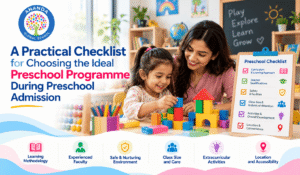
A Practical Checklist for Choosing the Ideal Preschool Programme During Preschool Admission

Preschool Admissions

Choosing a school for a young child involves more than finding a convenient location or comparing classroom facilities. Parents want an environment where their children feel secure, develop essential skills, and become comfortable exploring new ideas. Understanding the process of Preschool Admissions can help families evaluate their options carefully and prepare for this important transition. At Ananda Global School, early education is an opportunity to establish positive learning habits, encourage curiosity, and support children’s social, emotional, and intellectual development.

1. Look Beyond First Impressions When Evaluating a School

A welcoming entrance and colourful classroom can create a positive first impression, but parents should also understand what everyday learning looks like. The quality of teacher-child interactions, classroom routines, and opportunities for exploration often provides a clearer picture of the educational environment.

Observe whether children are encouraged to ask questions, express their feelings, and participate in activities without unnecessary pressure. Teachers should communicate patiently, offer age-appropriate guidance, and recognise that children develop at different rates.

A thoughtful evaluation should consider:

  • Classroom atmosphere: Is the environment organised, engaging, and comfortable for young learners?
  • Teacher involvement: Do educators listen to children and respond to their individual needs?
  • Learning opportunities: Are storytelling, creative activities, movement, and hands-on exploration part of the routine?
  • Safety practices: Are supervision, hygiene, and emergency procedures clearly explained?
  • Individual attention: How does the school support children who need additional time or encouragement?

These observations help parents look beyond appearance and understand how a school supports everyday development.

2. Understanding What Makes a School Suitable for Your Child

When evaluating a School In Ahmedabad, families should begin by identifying their child’s needs and their own expectations. Some children adapt quickly to new environments, while others benefit from gradual transitions, predictable routines, and additional reassurance.

The most suitable school is not necessarily the one with the longest list of activities. Instead, it should offer an approach that aligns with the child’s developmental stage and provides a healthy balance between structured learning and exploration.

Parents can compare their options using a simple framework.

Evaluation factor What parents should examine Useful question to ask
Teaching approach Balance of guided activities and play How are concepts introduced to young children?
Communication Frequency and clarity of updates How are developmental observations shared?
Daily schedule Rest, movement, learning, and breaks Is the routine appropriate for the age group?
Class environment Available space and learning materials How do children access and use resources?
Practical arrangements Timings, transport, and policies Will the schedule work for our family?

A school visit, discussion with educators, and careful review of admission requirements can help families make a more informed decision.

3. Preparing Children for Their First School Experience

Starting school can bring excitement as well as uncertainty. New surroundings, unfamiliar adults, and separation from caregivers may feel overwhelming for some children. Preparing them gradually can make the transition more comfortable.

Parents can introduce small changes at home before the first day. Establishing a consistent morning routine, reading stories about school, and encouraging children to manage simple tasks can help build familiarity.

It is also useful to practise everyday independence, such as putting toys away, carrying a small bag, washing hands, and asking for help when needed. These activities build confidence without turning preparation into a demanding academic exercise.

Emotional readiness deserves equal attention. Children should know that feeling nervous is normal and that trusted adults will help them settle in. Avoid comparing their adjustment with that of other children, as each child responds differently to change.

4. Comparing Educational Approaches and Long-Term Development

Families researching Schools In Ahmedabad may encounter different teaching philosophies, activity structures, and approaches to early development. Understanding these differences helps parents assess whether a programme encourages meaningful learning rather than focusing narrowly on early academic performance.

A balanced early education programme should nurture several areas of development together. Language activities encourage communication, creative projects build imagination, and collaborative games introduce cooperation. Movement-based activities support physical coordination, while simple puzzles encourage reasoning.

Parents should also examine how educators observe progress. Rather than expecting every child to achieve identical outcomes at the same time, effective early learning recognises individual strengths and identifies areas where further support may be helpful.

Ask how the school introduces early literacy and numeracy, handles differences in learning pace, and encourages children to participate. Clear answers can reveal whether the educational approach is appropriate for young learners.

5. Making the Admission Process More Manageable

Admission planning becomes easier when families gather essential information before submitting an application. Requirements and age eligibility can differ by programme, so parents should confirm current details directly with the school.

A practical preparation checklist includes:

  • Confirming the eligible age group and application deadlines.
  • Reviewing the documents required for registration.
  • Understanding fees, payment schedules, and refund policies.
  • Checking school timings and transport arrangements.
  • Asking about orientation sessions and settling-in procedures.

Keep a written record of important dates and unanswered questions. This reduces last-minute confusion and allows parents to focus on whether the school is the right fit for their child.

Frequently Asked Questions

  1. When should parents begin the admission process?

Start early enough to understand eligibility, deadlines, available places, and required documentation. Confirm the current schedule with the school.

  1. What documents are commonly required?

Schools may request a birth certificate, photographs, parent identification, and relevant medical or previous-school records. Requirements vary.

  1. Is academic ability the main measure of school readiness?

No. Communication, emotional adjustment, curiosity, and developing independence are also important considerations.

  1. Should parents visit a school before applying?

Yes, when visits are available. Observing the environment and speaking with educators can help clarify expectations and teaching practices.

  1. How can parents support adjustment after admission?

Maintain predictable routines, communicate calmly, acknowledge feelings, and coordinate with teachers if difficulties persist.

Conclusion

Choosing an early learning environment requires thoughtful consideration of teaching quality, emotional support, safety, practical arrangements, and individual developmental needs. Families comparing Schools In Satellite Ahmedabad should prioritise a setting that encourages curiosity, nurtures independence, and makes children feel supported as they learn. By asking informed questions and looking beyond first impressions, parents can make a confident decision that gives their child a positive foundation for the years ahead.


What Makes a Preschool a Good Choice for Young Children in Ahmedabad?


Preschool in Jodhpur Ahmedabad

The early years of childhood are a crucial period for developing communication, curiosity, emotional awareness, and independence. A positive preschool experience gives children opportunities to explore their surroundings, build relationships, and become comfortable with structured learning. For parents evaluating a Preschool in Jodhpur Ahmedabad, understanding the role of early education can make the decision more meaningful. Ananda Global School recognises the importance of creating learning experiences that support children’s development while helping them gradually prepare for the expectations of formal schooling.

1. Building Essential Skills Through Everyday Experiences

Preschool learning extends beyond recognising letters and numbers. Young children develop foundational abilities through conversations, imaginative play, movement, storytelling, and interactions with others. These experiences help them understand their environment and become active participants in learning.

For example, sorting coloured objects introduces early mathematical thinking, while listening to a story develops attention, vocabulary, and comprehension. Group activities also teach children to take turns, share materials, and communicate their needs.

A balanced early learning environment should encourage:

  • Language development: Listening to stories, expressing ideas, and learning new words.
  • Early numeracy: Recognising patterns, comparing quantities, and identifying shapes.
  • Fine motor coordination: Drawing, colouring, building, and handling simple learning materials.
  • Social awareness: Cooperating with peers and understanding different feelings.
  • Independent thinking: Making choices, solving simple problems, and exploring possibilities.

These skills develop at different rates. Children benefit most when activities are appropriate for their age and provide room for individual progress.

2. Choosing an Environment That Encourages Curiosity

When families search for the Best Preschool In Ahmedabad, they should look beyond attractive classrooms or an impressive list of activities. The quality of everyday interactions between children and educators is equally important.

A supportive environment allows children to ask questions, experiment, make mistakes, and try again without fear of embarrassment. Educators can nurture curiosity by introducing activities that encourage exploration rather than expecting every child to produce identical results.

Parents should consider the following factors when evaluating a school:

  • Educator interaction: Observe whether teachers listen patiently and communicate respectfully.
  • Learning resources: Look for age-appropriate books, puzzles, art materials, and opportunities for movement.
  • Safety and hygiene: Check supervision practices, classroom cleanliness, and secure entry procedures.
  • Emotional support: Ask how teachers help children manage separation anxiety, frustration, or disagreements.
  • Family communication: Understand how the school shares developmental observations and responds to parental concerns.

A visit during regular school hours can provide a more realistic picture of the learning atmosphere than a brief formal presentation.

3. Understanding the Connection Between Play and Learning

Play is an important way for young children to understand concepts that might otherwise seem abstract. During pretend play, children practise language and explore familiar roles. Building blocks introduce spatial awareness, balance, and early problem-solving, while outdoor games encourage coordination and cooperation.

Structured activities and free play serve different purposes. Teacher-guided experiences can introduce a particular concept, while child-led play gives children freedom to follow their interests and make independent decisions.

Learning activity Skill being developed Example of practical learning
Storytelling Language and listening Predicting what happens next
Building blocks Spatial reasoning Creating a stable structure
Art and craft Coordination and creativity Exploring colours and textures
Group games Cooperation Following rules and taking turns
Nature observation Curiosity and awareness Comparing leaves or noticing insects

The goal is not to turn every activity into a formal lesson. Instead, educators can recognise learning opportunities within everyday experiences and help children make connections at their own pace.

4. Preparing Children for a Smooth School Transition

A Pre School In Ahmedabad should help children gradually become comfortable with routines and responsibilities that support their next educational stage. Readiness is not determined solely by whether a child can write letters or count confidently.

Children also need opportunities to practise listening to instructions, communicating discomfort, managing belongings, and participating in group activities. These abilities make classroom transitions more manageable and support greater independence.

Helpful preparation includes:

  • Establishing consistent sleep and morning routines.
  • Encouraging children to put away toys and organise simple belongings.
  • Reading together and discussing everyday experiences.
  • Practising short separations from familiar caregivers when appropriate.
  • Helping children express feelings using simple, clear language.

Progress should be judged in relation to each child’s developmental stage. Gentle encouragement and predictable routines are generally more constructive than pressure to achieve milestones prematurely.

5. Supporting Development Through Home and School Collaboration

Children benefit when their experiences at home and school complement one another. Parents do not need to recreate classroom lessons after school. Everyday conversations, shared reading, simple household tasks, and opportunities for play can reinforce important skills naturally.

Regular communication with educators can also help families understand emerging strengths and areas where a child may need additional support. If a child struggles with communication, social interaction, or particular developmental tasks, discussing observations early can help determine appropriate next steps.

Consistency matters, but flexibility is equally important. Children may respond differently to unfamiliar activities, busy environments, or changes in routine. A collaborative approach helps adults provide reassurance without overlooking individual needs.

Frequently Asked Questions

  1. What is the main purpose of preschool education?

It supports early language, social, emotional, physical, and cognitive development while introducing children to group learning.

  1. At what age can children begin preschool?

Entry age depends on the programme and applicable education guidelines. Parents should confirm eligibility directly with the school.

  1. Is play-based learning academically useful?

Yes. Age-appropriate play can develop vocabulary, early numeracy, reasoning, coordination, and problem-solving.

  1. How can parents help children adjust to preschool?

Introduce predictable routines, talk positively about school, encourage independence, and allow time for adjustment.

  1. What should parents ask during a school visit?

Ask about educator qualifications, safety procedures, daily routines, class sizes, learning methods, and communication with families.

Conclusion

A meaningful preschool experience combines purposeful activities, supportive relationships, safe surroundings, and opportunities for children to develop at their own pace. Families considering a Preschool in Vejalpur should evaluate how well a school’s approach supports curiosity, emotional security, independence, and early learning milestones. By looking beyond academic worksheets and focusing on the whole child, parents can make a more informed choice that lays a strong foundation for a confident and positive educational journey.

Khel Mahakumbh – Kabaddi Champions!

We are proud to announce that the U-14 Boys and U-17 Boys Kabaddi Teams of Ananda Global School emerged as Winners in the Khel Mahakumbh.

Their outstanding teamwork, dedication, fighting spirit, and sportsmanship made this achievement possible.

Congratulations to all our young champions and their coaches!

Celebrating Sporting Excellence – Taekwondo Gold Medal

Heartiest congratulations to Poorni of Grade 6, Ananda Global School, for winning a Gold Medal at the Taekwondo Championship 2026, conducted by Advantage Taekwondo Academy.

Her dedication, discipline, strength and sporting spirit have brought great pride to the school.

Congratulations, Poorni! Keep training, keep shining and keep achieving!

How to Choose the Right Preschool in Satellite for Your Child’s Early Year


Preschool in Satellite

Selecting a preschool is one of the first major educational decisions parents make. At this stage, children are developing communication, independence, social skills, curiosity, and confidence, so the environment they enter matters greatly. Families looking for a Preschool in Satellite often compare curriculum, classroom practices, safety, activities, and the overall learning atmosphere. Institutions such as Ananda Global School may be considered as parents explore options, but making the right choice requires looking beyond names and facilities to understand what genuinely supports a young child’s development.

Understanding What Early Learning Should Provide

Preschool education should introduce children to learning in a way that matches their developmental stage. Young learners generally benefit from experiences that allow them to explore, communicate, move, create, and interact with others.

Instead of focusing heavily on worksheets or memorisation, an effective early learning environment can incorporate stories, music, art, movement, games, conversations, and hands-on activities. These experiences can strengthen foundational skills while helping children associate learning with curiosity and discovery.

Parents should consider whether a programme provides:

  • Age-appropriate learning experiences
  • Opportunities for creative expression
  • Regular social interaction with peers
  • A predictable yet flexible daily routine
  • Encouragement to communicate and ask questions
  • Support for developing independence

The goal is not to accelerate children into formal academics, but to establish a positive foundation for future learning.

Evaluating a School Beyond Its Reputation

Parents comparing Top Schools In Ahmedabad may naturally consider academic reputation, infrastructure, and long-term educational outcomes. However, when selecting an environment for younger children, other factors deserve equal attention.

The quality of teacher-child interaction can have a significant influence on a child’s everyday experience. Teachers should be attentive to children’s questions, emotions, interests, and individual learning patterns. A welcoming classroom can encourage hesitant children to participate and give confident children opportunities to explore further.

Parents can also examine how activities are organised. A thoughtfully planned day might include a combination of guided activities, free exploration, physical movement, creative work, stories, and opportunities for social interaction.

Visiting the school is particularly useful because it allows families to observe aspects that may not be apparent from written information.

Considering Emotional and Social Development

Starting preschool can be an emotional transition for children and families. Some children quickly adapt to a new environment, while others may need more time to become comfortable away from familiar caregivers.

A supportive setting can help children gradually develop confidence through consistent routines and reassuring interactions. Social experiences also introduce important skills such as taking turns, sharing, listening, cooperating, and expressing feelings appropriately.

Early education can support several developmental areas simultaneously:

Developmental Area Examples of Early Learning Experiences
Communication Stories, conversations, songs and group discussions
Social skills Cooperative games and peer activities
Physical development Movement, outdoor play and coordination activities
Creativity Drawing, music, crafts and imaginative play
Independence Simple classroom responsibilities and self-help routines

This broader perspective helps parents understand why preschool selection should involve more than comparing academic content.

What to Look for During a School Visit

When evaluating a Preschool In Satellite Ahmedabad, parents can use a school visit to assess how the educational philosophy translates into everyday practice.

Observe whether classrooms appear organised, engaging, and suitable for young children. Notice how teachers communicate with students and whether children seem comfortable participating. Parents can also ask about classroom sizes, daily schedules, safety procedures, communication with families, and how teachers respond when children are upset or require additional support.

Practical considerations matter too. School timings, transportation, meals, activity schedules, and the transition process can influence how easily the routine fits into family life.

It is helpful to prepare questions before the visit rather than relying only on the overall impression. A structured comparison can make it easier to distinguish between features that look attractive and those that genuinely benefit the child.

Making a Decision That Fits Your Child

There is no single checklist that works equally well for every family. A child who is naturally outgoing may respond differently to an environment than one who takes longer to adjust. Similarly, some children may thrive with greater opportunities for independent exploration, while others benefit from more structured guidance.

Before making a decision, parents can consider:

  • Does the learning approach match the child’s developmental stage?
  • Does the environment feel safe, welcoming, and engaging?
  • Are teachers responsive to children’s individual needs?
  • Is communication with parents clear and consistent?
  • Can the family comfortably maintain the school’s daily routine?

Looking at these factors together can lead to a more balanced decision.

Conclusion

Choosing an early learning environment requires careful consideration of educational practices, emotional support, classroom experiences, practical requirements, and the child’s individual personality. Families comparing Best Preschool in Ahmedabad Satellite options can use these factors to assess Ananda Global School and other possibilities more objectively. Rather than focusing on one feature, parents can look at the complete experience and choose an environment that helps their child feel secure, curious, capable, and ready to learn.

FAQs

What age is appropriate for preschool?

The appropriate age depends on the school’s admission policy and the child’s readiness. Parents should check the specific age criteria before applying.

What should children learn in preschool?

Children can develop communication, social, physical, creative, cognitive, and early independence skills through age-appropriate experiences.

How can parents prepare children for preschool?

Introducing simple routines, encouraging self-help skills, discussing school positively, and allowing children to gradually become familiar with the idea can help.

Is infrastructure important when choosing a preschool?

Facilities matter, particularly for safety and comfort, but they should be considered alongside teaching practices, teacher interaction, routines, and developmental support.

Should parents visit before enrolling?

A visit can be valuable because it allows parents to observe classrooms, interactions, routines, and the general learning environment firsthand.

How to Choose a CBSE School That Fits Your Child


CBSE Schools In Ahmedabad

Choosing a school is a long-term decision that involves much more than academic results. Parents often consider curriculum, teaching methods, extracurricular opportunities, student support, infrastructure, and the overall learning environment before making a choice. Families researching CBSE Schools In Ahmedabad may also come across institutions such as Ananda Global School while comparing their options. Understanding what to evaluate can help parents move beyond rankings and make a decision based on what genuinely suits their child’s learning needs, personality, and future goals.

Understanding the CBSE Approach to Learning

The CBSE curriculum is designed to provide students with a structured academic foundation while encouraging conceptual understanding and application of knowledge. However, the effectiveness of any curriculum depends significantly on how it is implemented in the classroom.

Parents should look at whether teaching encourages students to understand concepts instead of simply memorising information. Classroom discussions, practical activities, projects, technology-supported learning, and opportunities to ask questions can make academic subjects more engaging.

A strong learning environment should also help students gradually develop:

  • Independent thinking and problem-solving skills
  • Effective communication
  • Collaboration and teamwork
  • Digital and research skills
  • Time management and study habits
  • Confidence in expressing ideas

These capabilities become increasingly valuable as students move into higher grades and encounter more complex academic expectations.

What to Look for in a School

When comparing a CBSE Board School In Ahmedabad, parents should consider the complete educational experience rather than focusing on one attractive feature. Academic performance can provide useful information, but it does not always reveal how students experience school every day.

Teacher quality and classroom interaction deserve particular attention. Teachers who explain concepts clearly, encourage participation, and recognise different learning needs can create a more effective classroom environment.

Parents may also want to examine the school’s approach to assessments. Regular evaluation can be useful when it helps identify areas for improvement rather than creating unnecessary pressure. Understanding how feedback is provided can give families a better idea of how students are supported academically.

Balancing Academics With Overall Development

School years involve more than textbooks and examinations. Students also need opportunities to discover interests, develop relationships, manage responsibilities, and build confidence.

Extracurricular activities can complement classroom learning by allowing students to explore sports, arts, public speaking, technology, leadership, or other interests. Participation can also encourage discipline, teamwork, creativity, and resilience.

A balanced school experience may include:

Area What Parents Can Evaluate
Academics Conceptual learning, curriculum delivery, assessment and feedback
Activities Sports, arts, clubs, projects and other interests
Student support Academic guidance, communication and pastoral support
Learning environment Classroom culture, safety and student participation
Technology Appropriate use of digital tools and resources
Life skills Leadership, collaboration, responsibility and communication

The objective is not to maximise the number of activities, but to provide meaningful opportunities that complement students’ academic development.

Evaluating the Learning Experience

A family researching a CBSE School Ahmedabad should ideally look beyond brochures and online descriptions. Visiting the campus can help parents understand how the school’s stated philosophy translates into everyday experiences.

During a visit, observe classroom organisation, student participation, teacher communication, and the general atmosphere. Parents can ask how the school supports students who struggle with particular subjects and how advanced learners are encouraged to progress.

It is also worth asking about communication between the school and families. Clear communication can help parents understand academic expectations, upcoming activities, attendance requirements, and their child’s progress.

Practical factors matter as well. School timings, transportation, daily schedules, facilities, and the transition between grades can influence whether the school remains a comfortable fit over time.

Making a Well-Informed Choice

Every child has different strengths, interests, learning preferences, and support needs. Therefore, the ideal school should not simply be the one with the most impressive list of features. It should be an environment where the child can learn effectively and develop confidence.

Before making a final decision, parents can compare schools using a few practical questions:

  • Does the teaching approach suit the child’s learning style?
  • Are academic expectations appropriate for the child’s age and grade?
  • Is there sufficient attention to activities beyond academics?
  • How accessible are teachers and school administrators?
  • Does the environment encourage curiosity and responsible independence?
  • Can the family comfortably manage the school’s daily routine?

A written comparison can help families separate essential requirements from features that are simply appealing.

FAQs

What should parents consider when choosing a CBSE school?

Look at curriculum delivery, teachers, assessment practices, student support, activities, infrastructure, communication, and the overall learning environment.

Is academic performance enough to judge a school?

No. Results can offer one perspective, but classroom experience, teaching quality, student development, and support systems are also important.

Why should parents visit a school before admission?

A visit allows families to observe the environment, ask specific questions, and understand how the school’s educational approach works in practice.

Are extracurricular activities important?

They can be valuable because they give students opportunities to develop interests and practise skills such as teamwork, creativity, communication, and leadership.

How can parents compare multiple schools objectively?

Create a checklist based on educational priorities, practical requirements, student support, activities, and the child’s individual needs, then evaluate each option against the same criteria.

Conclusion

Selecting a school is ultimately about finding the right balance between academic structure, personal development, supportive teaching, and practical suitability. Parents exploring Top 10 CBSE Schools In Ahmedabad can use these criteria to assess Ananda Global School alongside other options without relying solely on rankings or reputation. A thoughtful comparison, school visit, and clear understanding of the child’s needs can help families choose an environment where learning is purposeful, balanced, and sustainable.

Ananda Global School Student Reva Secures 2nd Position in All Gujarat Shotokan Karate Championship 2026

Ananda Global School is proud to announce the outstanding sports achievement of Reva, a talented student of Grade 3B. Reva delivered a remarkable performance at the prestigious 16th All Gujarat Shotokan Karate Championship 2026, held on 15th and 16th August 2026.

Demonstrating exceptional martial arts skills, discipline, and determination, Reva secured the 2nd Position in Individual Kumite. Her focus, dedication, and sportsmanship have brought great honor to the Ananda Global School family.

We extend our heartiest congratulations to Reva for this fantastic victory and wish her continued success in her future athletic endeavors. Keep shining and reaching greater heights!