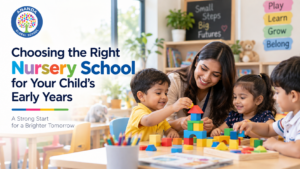
Selecting a preschool is one of the first major educational decisions parents make. At this stage, children are developing communication, independence, social skills, curiosity, and confidence, so the environment they enter matters greatly. Families looking for a Preschool in Satellite often compare curriculum, classroom practices, safety, activities, and the overall learning atmosphere. Institutions such as Ananda Global School may be considered as parents explore options, but making the right choice requires looking beyond names and facilities to understand what genuinely supports a young child’s development.
Understanding What Early Learning Should Provide
Preschool education should introduce children to learning in a way that matches their developmental stage. Young learners generally benefit from experiences that allow them to explore, communicate, move, create, and interact with others.
Instead of focusing heavily on worksheets or memorisation, an effective early learning environment can incorporate stories, music, art, movement, games, conversations, and hands-on activities. These experiences can strengthen foundational skills while helping children associate learning with curiosity and discovery.
Parents should consider whether a programme provides:
- Age-appropriate learning experiences
- Opportunities for creative expression
- Regular social interaction with peers
- A predictable yet flexible daily routine
- Encouragement to communicate and ask questions
- Support for developing independence
The goal is not to accelerate children into formal academics, but to establish a positive foundation for future learning.
Evaluating a School Beyond Its Reputation
Parents comparing Top Schools In Ahmedabad may naturally consider academic reputation, infrastructure, and long-term educational outcomes. However, when selecting an environment for younger children, other factors deserve equal attention.
The quality of teacher-child interaction can have a significant influence on a child’s everyday experience. Teachers should be attentive to children’s questions, emotions, interests, and individual learning patterns. A welcoming classroom can encourage hesitant children to participate and give confident children opportunities to explore further.
Parents can also examine how activities are organised. A thoughtfully planned day might include a combination of guided activities, free exploration, physical movement, creative work, stories, and opportunities for social interaction.
Visiting the school is particularly useful because it allows families to observe aspects that may not be apparent from written information.
Considering Emotional and Social Development
Starting preschool can be an emotional transition for children and families. Some children quickly adapt to a new environment, while others may need more time to become comfortable away from familiar caregivers.
A supportive setting can help children gradually develop confidence through consistent routines and reassuring interactions. Social experiences also introduce important skills such as taking turns, sharing, listening, cooperating, and expressing feelings appropriately.
Early education can support several developmental areas simultaneously:
| Developmental Area | Examples of Early Learning Experiences |
| Communication | Stories, conversations, songs and group discussions |
| Social skills | Cooperative games and peer activities |
| Physical development | Movement, outdoor play and coordination activities |
| Creativity | Drawing, music, crafts and imaginative play |
| Independence | Simple classroom responsibilities and self-help routines |
This broader perspective helps parents understand why preschool selection should involve more than comparing academic content.
What to Look for During a School Visit
When evaluating a Preschool In Satellite Ahmedabad, parents can use a school visit to assess how the educational philosophy translates into everyday practice.
Observe whether classrooms appear organised, engaging, and suitable for young children. Notice how teachers communicate with students and whether children seem comfortable participating. Parents can also ask about classroom sizes, daily schedules, safety procedures, communication with families, and how teachers respond when children are upset or require additional support.
Practical considerations matter too. School timings, transportation, meals, activity schedules, and the transition process can influence how easily the routine fits into family life.
It is helpful to prepare questions before the visit rather than relying only on the overall impression. A structured comparison can make it easier to distinguish between features that look attractive and those that genuinely benefit the child.
Making a Decision That Fits Your Child
There is no single checklist that works equally well for every family. A child who is naturally outgoing may respond differently to an environment than one who takes longer to adjust. Similarly, some children may thrive with greater opportunities for independent exploration, while others benefit from more structured guidance.
Before making a decision, parents can consider:
- Does the learning approach match the child’s developmental stage?
- Does the environment feel safe, welcoming, and engaging?
- Are teachers responsive to children’s individual needs?
- Is communication with parents clear and consistent?
- Can the family comfortably maintain the school’s daily routine?
Looking at these factors together can lead to a more balanced decision.
Conclusion
Choosing an early learning environment requires careful consideration of educational practices, emotional support, classroom experiences, practical requirements, and the child’s individual personality. Families comparing Best Preschool in Ahmedabad Satellite options can use these factors to assess Ananda Global School and other possibilities more objectively. Rather than focusing on one feature, parents can look at the complete experience and choose an environment that helps their child feel secure, curious, capable, and ready to learn.
FAQs
What age is appropriate for preschool?
The appropriate age depends on the school’s admission policy and the child’s readiness. Parents should check the specific age criteria before applying.
What should children learn in preschool?
Children can develop communication, social, physical, creative, cognitive, and early independence skills through age-appropriate experiences.
How can parents prepare children for preschool?
Introducing simple routines, encouraging self-help skills, discussing school positively, and allowing children to gradually become familiar with the idea can help.
Is infrastructure important when choosing a preschool?
Facilities matter, particularly for safety and comfort, but they should be considered alongside teaching practices, teacher interaction, routines, and developmental support.
Should parents visit before enrolling?
A visit can be valuable because it allows parents to observe classrooms, interactions, routines, and the general learning environment firsthand.