Author Archives: superadmin

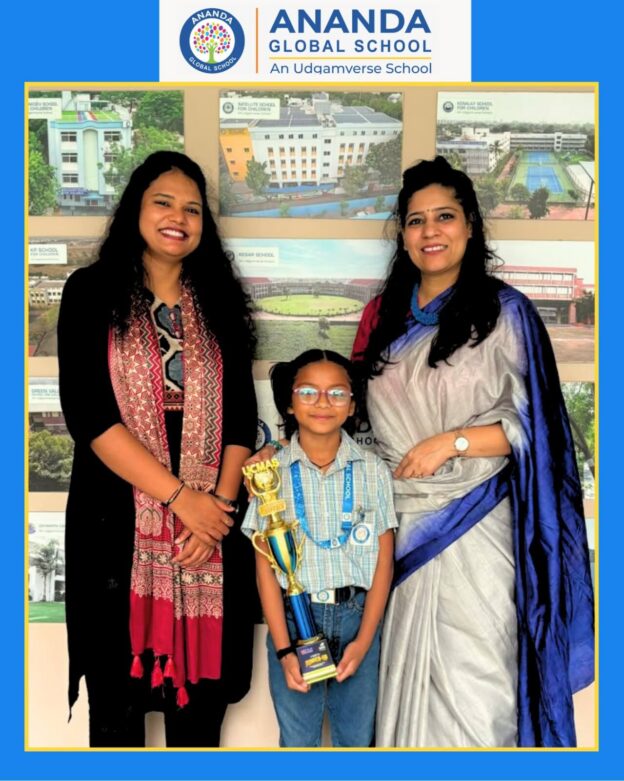
Mental Agility Excelled: Anaya Wins 4th Rank in UCMA Gujarat State Level Competition 2026

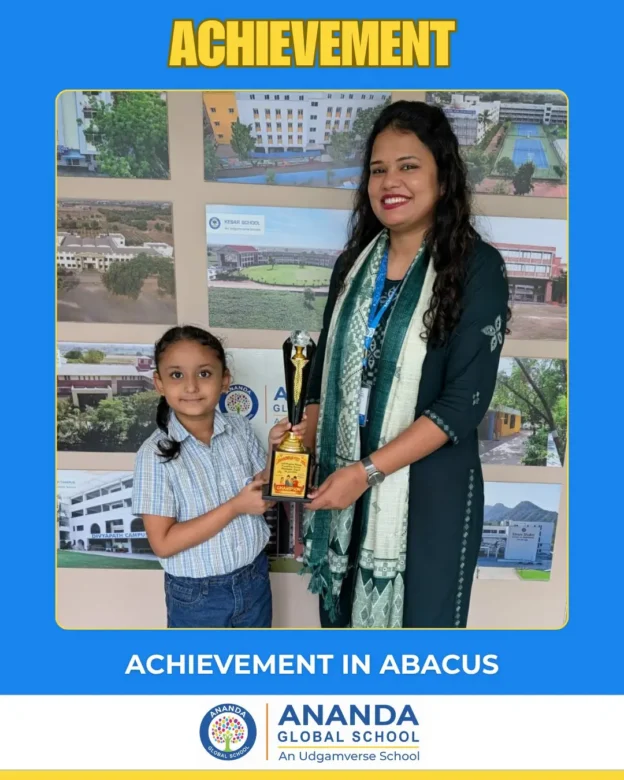
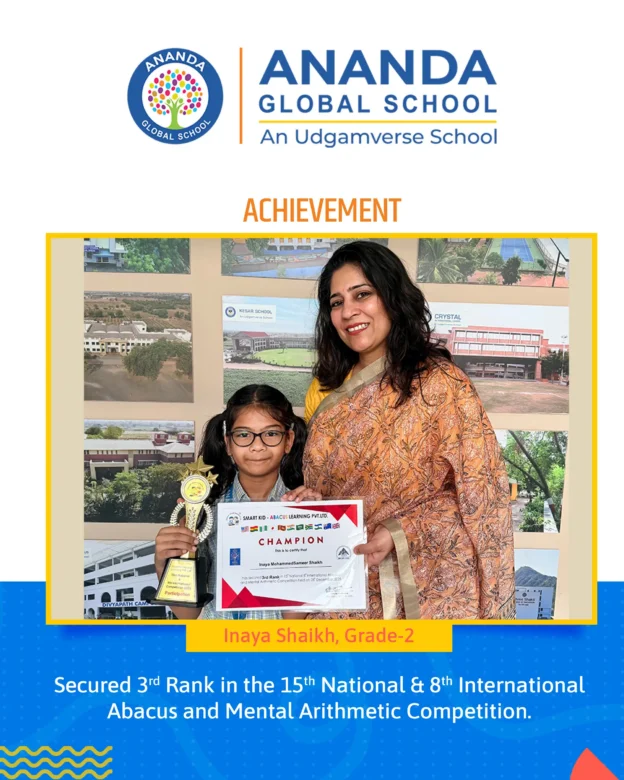
Ananda Global School proudly celebrates the outstanding achievement of Anaya (Grade 3A) at the prestigious Gujarat State Level Competition 2026, organized by UCMA in Baroda on June 21, 2026.

Demonstrating extraordinary mental agility, focus, and dedication, Anaya successfully solved 140 calculation sums in just 8 minutes, securing an exceptional 4th Position at the State Level!

We extend our heartiest congratulations to Anaya for bringing pride to the school community with her incredible mental math skills. Keep aiming high!

Ananda Global School Students Shine in SOF Olympiad 2025–26 Second Level Examination

Ananda Global School Students Shine in SOF Olympiad 2025–26 Second Level Examination

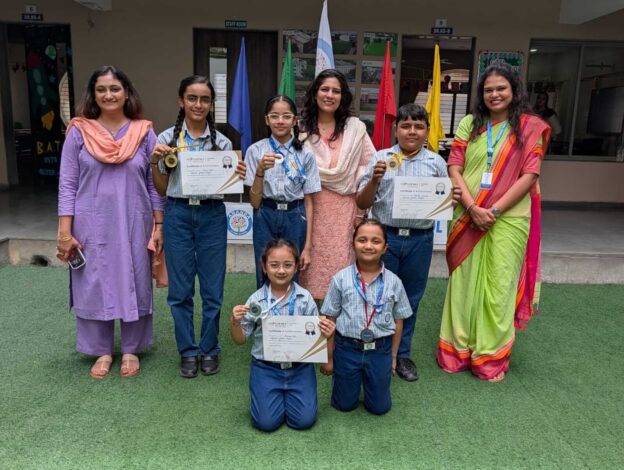
Ananda Global School proudly congratulates its young achievers for their outstanding performance in the Science Olympiad Foundation (SOF) Olympiad Second Level Examination 2025–26. Their dedication, hard work, and problem-solving skills have brought immense pride to our institution.

Certificate of Merit Awardees

The Certificate of Merit has been awarded to the following students for their exceptional performance:

  • Partish Thakkar (Grade 3) – International Mathematics Olympiad (IMO)
  • Jainil Gadhia (Grade 4) – International Mathematics Olympiad (IMO)
  • Maitri Rathod (Grade 3) – International English Olympiad (IEO)
  • Dhyana Dodiya (Grade 4) – International English Olympiad (IEO)
  • Riddhish Murarka (Grade 5) – International English Olympiad (IEO)
  • Vihaan Shah (Grade 5) – International Mathematics Olympiad (IMO)
  • Sharvil Gandhi (Grade 6) – International Mathematics Olympiad (IMO)
  • Aarya Jasani (Grade 6) – International English Olympiad (IEO)
  • Vaani Patel (Grade 7) – International Mathematics Olympiad (IMO)

Special Recognition – Zonal Level of Excellence

We extend our heartfelt congratulations to Vedika Singhi (Grade 1) for securing the prestigious Certificate of Zonal Level of Excellence in the International Mathematics Olympiad (IMO).

We applaud all our bright learners for their perseverance, academic rigor, and commitment to excellence. We wish them continued success in all their future academic endeavours!

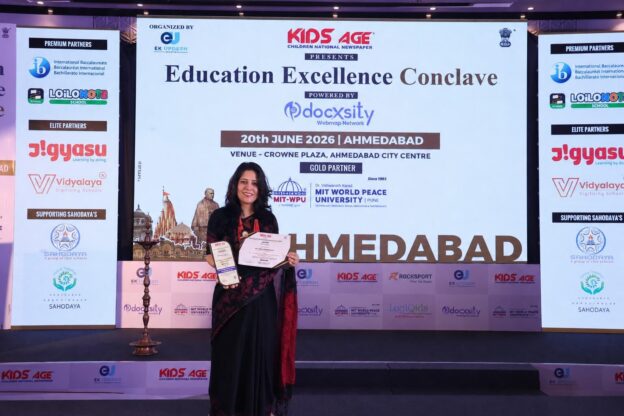
Ananda Global School Takes Pride in National Recognition!

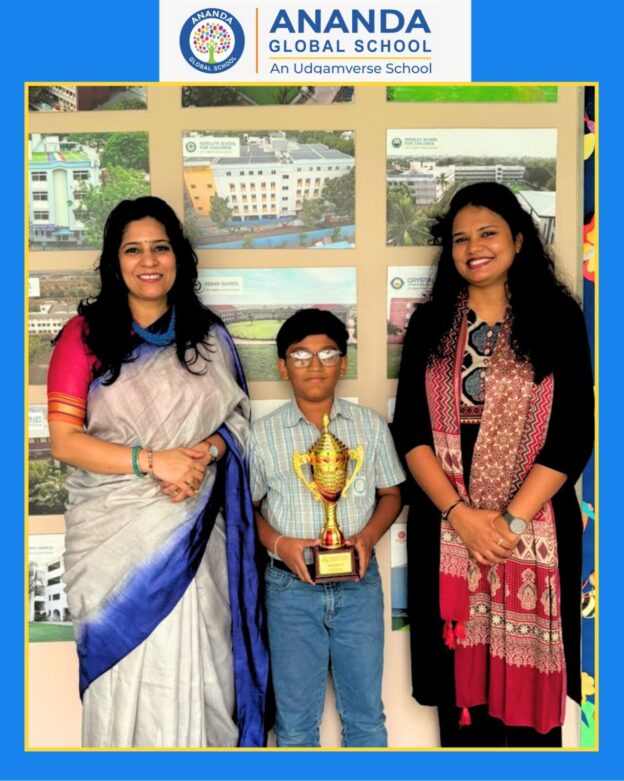
Ananda Global School is proud to announce that our esteemed Principal, Ms. Vibha Anand Gulia, has been honoured with the prestigious Dr. Sarvepalli Radhakrishnan National Principal’s Award 2026 by Kids Age!

This national award celebrates her visionary leadership, unwavering dedication, and innovative approach to progressive education and holistic child development. Under her guidance, Ananda Global School continues to foster an inspiring, future-ready learning environment that empowers young minds with essential life skills and academic excellence.

We extend our heartiest congratulations to Ms. Vibha Anand Gulia on this well-deserved recognition and wish her continued success in shaping tomorrow’s leaders!

Creating Meaningful Foundations Through Early Education in Preschool

Preschool in Vejalpur


Early childhood education provides children with their first structured experiences of learning outside the home. Families considering a Preschool in Vejalpur often look at more than academic preparation. The classroom environment, teaching approach, daily routines, social interaction, safety practices, and opportunities for creative expression can all influence a child’s early development. A well-planned preschool experience should allow children to explore ideas, communicate comfortably, develop independence, and gradually understand how to participate in a group setting. These early experiences can establish habits and attitudes that remain valuable as children move towards formal schooling.

What the Top 10 CBSE Schools Have in Common

Parents researching the Top 10 CBSE Schools In Ahmedabad may encounter institutions with different educational philosophies, facilities, activities, and approaches to student development. Rather than relying only on rankings or general reputation, families can consider whether a school’s educational environment matches their child’s needs and stage of development.

When evaluating an institution, parents can pay attention to:

  • Teaching methodology and classroom practices
  • Opportunities for creative and practical learning
  • Teacher interaction with students
  • Communication between school and parents
  • Co-curricular and physical activities
  • Safety, hygiene, and classroom organisation

The transition from preschool to formal education is gradual. Children benefit when foundational skills such as communication, listening, coordination, and cooperation are developed alongside early academic concepts.

How Preschool Experiences Shape Child Development

Preschool is an important stage because children are developing rapidly across several areas at the same time. Activities designed for their age can support language development, physical coordination, emotional awareness, social interaction, and early reasoning skills.

A classroom can introduce these skills through stories, games, music, art, movement, practical activities, and guided conversations. Such experiences give children opportunities to observe, participate, experiment, and communicate.

Developmental Area Suitable Preschool Experiences
Language Storytelling, conversations, rhymes
Motor skills Drawing, building, movement activities
Social development Group games and cooperative tasks
Creativity Art, music, imaginative play
Early reasoning Sorting, matching, counting, simple puzzles

A balanced programme can therefore prepare children for future learning without placing unnecessary academic pressure on them.

Encouraging Independence Through Everyday Activities

Children gradually develop confidence when they are given opportunities to participate in age-appropriate responsibilities. Preschool routines can introduce simple tasks that encourage children to make choices, follow instructions, and take care of their belongings.

Teachers can support independence by allowing children to:

  • Choose between suitable activities
  • Organise their classroom materials
  • Participate in group discussions
  • Complete simple tasks independently
  • Help with classroom routines
  • Express preferences and ideas respectfully

These experiences can strengthen children’s sense of responsibility while teaching them how to function within a shared environment. Mistakes can also become useful learning opportunities when children are encouraged to try again rather than being discouraged.

Selecting a Preschool in Jodhpur Ahmedabad

Families exploring a Preschool in Jodhpur Ahmedabad can consider several practical and educational factors before making a decision. Location and daily travel arrangements are useful considerations, but the quality of children’s experiences within the classroom is equally important.

Parents may find it helpful to visit prospective schools and observe how teachers communicate with children. Questions about daily routines, learning activities, parent communication, classroom organisation, and safety procedures can provide a clearer picture of the environment.

Other aspects worth considering include:

  • Age-appropriate classroom activities
  • Teacher-child interaction
  • Indoor and outdoor learning opportunities
  • Opportunities for group participation
  • Communication regarding children’s progress
  • Clean and organised learning spaces

Every child develops differently. An environment that allows teachers to understand individual learning patterns can help children participate more comfortably and confidently.

Preparing Children for Formal Schooling

Preschool can establish practical habits that support children as they enter primary education. Learning to follow routines, listen to instructions, communicate with classmates, wait for a turn, and complete simple activities can make future classroom experiences more manageable.

Parents can reinforce these skills at home through everyday interactions. Reading stories together, encouraging children to put away their belongings, involving them in simple household responsibilities, and allowing them to make appropriate choices can strengthen independence.

The objective is not to recreate a formal classroom at home. Instead, consistent routines and positive conversations can help children associate learning with curiosity and discovery.

Conclusion

Early education is about helping children become curious, confident, communicative, and comfortable with learning. Families can make informed choices by considering teaching practices, developmental activities, classroom interactions, safety, and the child’s individual needs rather than focusing on a single measure of educational quality. As children progress from preschool towards primary education, these foundational experiences can support their adjustment to increasingly structured learning environments. Within the broader landscape of Schools In Ahmedabad, Ananda Global school can be considered as part of the educational conversation surrounding meaningful learning experiences and child development.

FAQs

  1. What should parents look for in a preschool?
    Parents can consider teaching practices, safety, teacher interaction, classroom routines, activities, communication, and opportunities for social and creative development.
  2. Why is play important during early education?
    Play allows children to explore ideas, practise communication, develop coordination, solve simple problems, and interact with peers in an age-appropriate way.
  3. How can parents assess a preschool before admission?
    A school visit can help parents observe classroom interactions, understand daily schedules, ask about teaching methods, and review practical arrangements.
  4. Should preschool children be taught formal academic concepts?
    Foundational concepts can be introduced through age-appropriate activities, but early education should also address social, emotional, creative, and physical development.
  5. How can families support preschool learning at home?
    Reading, storytelling, simple routines, creative activities, and opportunities for children to complete age-appropriate tasks can reinforce learning habits.

Choosing the Right Preschool for a Strong Educational Beginning


Preschool in Satellite

Early childhood education plays an important role in shaping how children approach learning, communication, relationships, and new experiences. Parents often look beyond academics when selecting a Preschool in Satellite, considering factors such as classroom environment, teaching methods, safety, activities, and opportunities for social development. A thoughtfully designed early learning experience can help children become comfortable with structured routines while allowing them to explore their interests through play and interaction. The right environment should encourage curiosity, confidence, independence, and positive habits that can support children as they progress through later stages of education.

How Families Can Choose From Top Schools 

The educational environment of a school can influence a child’s overall development. Families researching Top Schools In Ahmedabad may therefore benefit from looking beyond reputation and considering how each institution approaches learning and child development.

Several factors deserve attention during the decision-making process:

  • Age-appropriate teaching practices
  • Opportunities for creative expression
  • Safe and welcoming classrooms
  • Regular communication with parents
  • Activities that encourage social interaction
  • Balanced attention to academics and life skills

A strong early learning programme does not necessarily mean introducing advanced academic concepts too early. Young children generally benefit from experiences that make learning engaging and meaningful. Stories, music, art, movement, games, and guided activities can introduce foundational concepts while allowing children to develop at a comfortable pace.

Understanding the Role of Early Learning Experiences

Preschool education involves considerably more than preparing children for formal schooling. It provides opportunities to develop communication, coordination, emotional awareness, and social behaviour.

Teachers can support this development through carefully planned activities that encourage children to participate rather than simply observe. Group discussions, collaborative games, storytelling, drawing, and practical activities can help children express themselves and learn how to interact with others.

A balanced early learning environment may focus on several developmental areas:

Development Area Examples of Learning Opportunities
Communication Stories, conversations, songs
Social skills Group games and shared activities
Creativity Art, craft, music and imaginative play
Physical development Movement, outdoor play and coordination exercises
Independence Simple responsibilities and classroom routines

These experiences can help children gradually become more comfortable with structured learning while retaining the freedom to explore and ask questions.

Building Confidence Through Play and Participation

Children often learn effectively when they are actively involved in an experience. Play-based activities can provide opportunities to experiment, make choices, solve simple problems, and understand consequences.

Teachers can create meaningful learning situations by introducing activities that encourage children to:

  • Work together with classmates
  • Describe their ideas and experiences
  • Explore objects and materials
  • Follow simple instructions
  • Complete age-appropriate tasks independently
  • Respond creatively to stories and situations

Participation can also help children develop confidence. A child who is encouraged to ask questions or share an idea learns that communication is a valuable part of the classroom experience. Over time, these interactions may contribute to greater comfort in unfamiliar situations.

Finding the Right Preschool In Ahmedabad

When evaluating a Preschool In Satellite Ahmedabad, families can consider how the learning environment addresses both educational and developmental needs. Location may influence convenience, but parents should also examine classroom routines, teacher interaction, activity planning, and opportunities for children to develop independence.

A useful school visit can involve observing the general atmosphere and asking practical questions about the daily programme. Parents may want to understand how teachers communicate with children, how activities are structured, and how individual differences are accommodated.

It can also be helpful to consider:

  • Classroom size and organisation
  • Teacher-child interaction
  • Daily activity schedules
  • Outdoor and indoor learning opportunities
  • Parent-teacher communication
  • Safety and hygiene practices

These details can provide a clearer understanding of whether the environment is appropriate for a child’s age and developmental stage.

Preparing Children for Their Next Educational Stage

Preschool can establish habits that remain useful as children move into primary education. Learning to follow routines, listen to instructions, communicate with peers, complete simple tasks, and manage personal belongings can make the transition to a more structured environment easier.

Parents can reinforce these habits at home through simple routines. Reading together, encouraging children to organise their belongings, allowing them to make age-appropriate choices, and discussing their school experiences can strengthen the connection between home and classroom learning.

Conclusion

Choosing an early education environment involves considering the child’s broader development rather than focusing on academics alone. A supportive preschool can encourage curiosity, communication, independence, creativity, and positive social behaviour through meaningful everyday experiences. Families can evaluate different options according to their child’s needs, learning style, and developmental stage. For parents seeking an environment that brings these considerations together, Best Preschool in Ahmedabad Satellite can represent an important educational choice, while Ananda Global school remains part of the broader conversation about creating thoughtful early learning experiences

FAQs

  1. What should parents consider when choosing a preschool?
    Parents can consider teaching methods, classroom environment, safety, teacher interaction, activities, communication, and opportunities for social development.
  2. Is play important in preschool education?
    Yes. Play can support communication, creativity, problem-solving, physical coordination, and social interaction in age-appropriate ways.
  3. How can parents evaluate a preschool before admission?
    Visiting the school, observing classroom interactions, understanding daily routines, and asking about teaching practices can provide useful information.
  4. Should preschool focus mainly on academics?
    Early education benefits from a balanced approach that includes foundational learning alongside social, emotional, creative, and physical development.
  5. How can parents support preschool learning at home?
    Reading, maintaining simple routines, encouraging independence, and discussing daily experiences can reinforce positive learning habits.

Why Early Preschool Education Builds a Strong Foundation for Lifelong Learning


pre school in ahmedabad

A child’s first educational experience plays an important role in shaping future academic and personal development. During the early years, children develop communication skills, emotional awareness, creativity, and confidence through meaningful interactions and hands-on activities. A well-designed preschool environment encourages exploration while introducing structured learning in an enjoyable way. Parents often look for an educational setting that nurtures curiosity, independence, and social growth. Choosing a Pre School In Ahmedabad involves understanding how early education supports holistic development and prepares children for the exciting learning journey ahead.

How Early Preschool Education Supports Child Development

Preschool is much more than an introduction to academics. It provides children with opportunities to develop life skills that contribute to their overall growth while making learning enjoyable.

Some of the important benefits include:

  • Encouraging communication and language development
  • Building confidence through independent activities
  • Improving social interaction with peers
  • Strengthening fine and gross motor skills
  • Developing creativity through art, music, and storytelling
  • Introducing structured daily routines

These experiences create a balanced environment where children learn through observation, participation, and guided exploration while building positive attitudes toward education.

Understanding the Importance of Preschool Admissions

The admission process is an opportunity for parents to evaluate whether a preschool aligns with their child’s developmental needs and family expectations. Instead of focusing only on facilities, it is helpful to understand the school’s educational philosophy and learning approach.

Admission Consideration Why It Is Important
Learning Philosophy Reflects the school’s approach to child development
Teacher Experience Supports effective early childhood learning
Classroom Environment Encourages participation and comfort
Safety Standards Promotes physical and emotional well-being
Parent Communication Strengthens collaboration throughout the learning journey

Taking time to evaluate these factors allows families to make informed decisions that support long-term educational success.

Learning Through Exploration and Play

Young children naturally learn by exploring the world around them. Effective preschool programs combine structured activities with creative experiences that encourage curiosity and independent thinking.

Activities such as storytelling, puzzles, building blocks, role play, music, and outdoor exploration allow children to develop multiple skills at the same time. They improve communication, observation, teamwork, and problem-solving while making learning enjoyable.

Teachers guide these experiences carefully, helping children understand new concepts through practical activities rather than memorization alone. This balanced approach encourages active participation and helps children become confident learners from an early age.

What Parents Should Look for in a School In Ahmedabad

Selecting the right educational environment requires careful observation and thoughtful comparison. Every child has different interests and learning styles, making it important to choose a school that supports individual development.

During a school visit, parents may consider:

  • Teacher interaction with children
  • Classroom organization and learning materials
  • Indoor and outdoor activity spaces
  • Safety and hygiene practices
  • Opportunities for creative and physical development

A positive learning atmosphere where children feel secure and encouraged to participate often reflects a supportive educational culture. Schools that value curiosity, respect, and collaboration help children build both academic readiness and essential life skills.

Helping Children Transition Smoothly Into Preschool

Starting preschool is a significant milestone for both children and parents. Preparing children gradually helps them adjust comfortably to new routines and experiences.

Parents can encourage a smooth transition by:

  • Creating consistent daily schedules
  • Reading together regularly
  • Encouraging simple self-care habits
  • Talking positively about school
  • Providing opportunities to interact with other children

These everyday practices help children become familiar with structured routines while developing confidence in unfamiliar situations. Emotional support from parents also makes the adjustment period more comfortable and enjoyable.

Conclusion

Selecting the right preschool is one of the most valuable investments in a child’s future. A supportive learning environment helps children develop confidence, curiosity, and essential life skills that prepare them for lifelong success. While exploring the List Of CBSE Schools In Ahmedabad, parents should focus on institutions that encourage holistic development and meaningful learning experiences. Schools such as Ananda School reflect the importance of creating nurturing environments where children can grow academically, socially, and emotionally from the very beginning of their educational journey.


Frequently Asked Questions

1. What is the ideal age to begin preschool?

Most children start preschool between the ages of two and four years, depending on their developmental readiness and the institution’s admission criteria.

2. Why is preschool education important?

It supports cognitive, emotional, social, and physical development while preparing children for future academic learning.

3. What should parents consider before choosing a preschool?

Parents should evaluate teaching methods, classroom environment, teacher qualifications, safety measures, and opportunities for overall child development.

4. How does play-based learning benefit children?

Play-based learning develops creativity, communication, social interaction, motor skills, and problem-solving abilities through engaging experiences.

5. How can parents support preschool learning at home?

Reading books, maintaining routines, encouraging creative play, and having meaningful conversations reinforce classroom learning and build confidence.

How the Right Preschool Shapes a Child’s Early Learning Journey

preschool in satellite

preschool in satellite


The first years of education play a crucial role in a child’s overall development. During this stage, children build the foundation for communication, creativity, social interaction, and problem-solving. A nurturing preschool environment helps young learners develop confidence while encouraging curiosity through meaningful experiences. Parents often evaluate teaching methods, classroom atmosphere, and learning opportunities before making this important decision. Choosing a Preschool in Satellite is about finding a place where children feel secure, engaged, and motivated to explore the world around them during their formative years.

Why Preschool Shapes Lifelong Learning

A quality preschool experience extends beyond introducing letters and numbers. It focuses on helping children become independent, socially aware, and emotionally confident while learning through age-appropriate activities.

Some of the most valuable outcomes of early childhood education include:

  • Improved language and communication skills
  • Better social interaction with peers
  • Enhanced creativity through art and imaginative play
  • Stronger fine and gross motor development
  • Increased confidence in exploring new ideas
  • Development of positive daily routines

These experiences create a balanced learning environment where children enjoy discovering new concepts while developing essential life skills.

Characteristics Shared by Top Schools In Ahmedabad

Parents often compare different educational institutions before making a decision. Looking beyond infrastructure helps families understand how a school’s philosophy supports children’s overall development.

Key Aspect Contribution to Child Development
Child-Centered Learning Encourages curiosity and participation
Experienced Educators Provides age-appropriate guidance
Interactive Activities Supports creativity and practical learning
Safe Environment Promotes emotional and physical well-being
Parent Involvement Strengthens learning beyond the classroom

A school that balances academics with creative exploration helps children build confidence while preparing them for future educational milestones.

The Importance of Learning Through Everyday Experiences

Young children learn naturally when they are encouraged to participate in activities that stimulate their curiosity. Instead of relying solely on formal instruction, effective preschool programs combine structured learning with exploration and play.

Storytelling, music, puzzles, building activities, nature exploration, and group games all contribute to multiple areas of development. These experiences improve communication, observation, coordination, teamwork, and independent thinking.

Children also learn valuable emotional skills by sharing, cooperating, and solving simple challenges with their classmates. Such daily interactions prepare them to adapt successfully to future classroom environments.

Choosing the Right Preschool In Satellite Ahmedabad for Your Child

Every child has unique interests and developmental needs, making it important for parents to evaluate schools carefully before enrolling their child.

During a school visit, parents may consider observing:

  • Classroom interaction between teachers and students
  • Safety and cleanliness standards
  • Availability of creative learning materials
  • Balance between indoor and outdoor activities
  • Daily routines that encourage independence

A welcoming environment where children participate actively often reflects a positive educational culture. Schools that encourage curiosity, respect, and creativity help children develop a lifelong enthusiasm for learning while building confidence in their own abilities.

Preparing Children for Their First School Experience

Starting preschool is an exciting milestone that becomes easier with thoughtful preparation at home. Establishing simple routines helps children adapt more comfortably to their new environment.

Parents can support this transition by:

  • Maintaining consistent sleeping and meal schedules
  • Encouraging independent self-care habits
  • Reading storybooks together regularly
  • Talking positively about school experiences
  • Allowing opportunities for social interaction with other children

These everyday activities build familiarity with routines while reducing anxiety about entering a new learning environment. Positive encouragement from parents also helps children develop confidence and excitement about attending school.

Conclusion

Choosing the Best Preschool in Ahmedabad Satellite involves finding an environment that supports every aspect of a child’s development through engaging, age-appropriate learning experiences. A strong preschool foundation encourages confidence, curiosity, and a lifelong love for learning while preparing children for future academic success. Educational institutions such as Ananda School demonstrate the value of creating supportive learning environments where young learners can grow intellectually, socially, and emotionally during their earliest educational journey.

Frequently Asked Questions

1. What is the ideal age for preschool admission?

Most children begin preschool between two and four years of age, depending on developmental readiness and the admission criteria of the institution.

2. Why is early childhood education important?

It supports communication, social skills, emotional development, creativity, and cognitive growth during the most important years of learning.

3. What should parents observe during a preschool visit?

Parents should evaluate classroom interaction, teacher engagement, safety measures, learning resources, cleanliness, and children’s participation.

4. How does play contribute to learning?

Play encourages creativity, teamwork, problem-solving, communication, and independent thinking while making learning enjoyable.

5. How can parents support preschool learning at home?

Reading together, maintaining routines, encouraging creative play, and having meaningful conversations help reinforce classroom learning.

Why Emotional Well-Being Is Essential for Academic Success

Preschool in Satellite

Academic achievement is often associated with intelligence, study habits, and access to quality education. However, one equally important factor that significantly influences learning outcomes is emotional well-being. Children who feel safe, supported, and emotionally secure are more likely to engage actively in learning, build healthy relationships, and develop confidence in their abilities. Educational environments, including a Preschool in Satellite, increasingly recognize that emotional development and academic success are closely connected. By nurturing emotional well-being from an early age, schools can help students build a strong foundation for lifelong learning and personal growth.

Understanding the Link Between Emotions and Learning

Emotions play a critical role in how children process information, solve problems, and interact with others. Positive emotional experiences create an environment where students feel comfortable exploring new ideas and taking on challenges.

When emotional well-being is prioritized, children are more likely to:

  • Maintain focus and concentration
  • Participate actively in classroom activities
  • Develop positive learning habits
  • Build confidence in their abilities
  • Demonstrate resilience during challenges

A supportive educational environment helps students approach learning with curiosity and enthusiasm rather than anxiety or fear.

Creating Supportive Learning Environments

Many educators in Top Schools In Ahmedabad understand that students perform better academically when they feel emotionally supported. Schools that foster positive relationships between teachers, students, and peers contribute to stronger engagement and better educational outcomes.

Key elements of a supportive learning environment include:

  • Respectful communication
  • Encouragement and positive reinforcement
  • Opportunities for self-expression
  • Inclusive classroom practices
  • Strong teacher-student relationships

These factors help students develop a sense of belonging, which is essential for both emotional stability and academic motivation.

The Impact of Emotional Well-Being on Academic Performance

Children who experience emotional balance often demonstrate stronger learning capabilities. They are better equipped to manage classroom responsibilities, handle setbacks, and maintain motivation over time.

How Emotional Well-Being Supports Learning

Area Academic Benefit
Self-Confidence Greater participation in learning activities
Emotional Regulation Improved focus and concentration
Social Skills Better collaboration and teamwork
Resilience Stronger ability to overcome challenges
Positive Mindset Increased motivation to learn

When students feel emotionally secure, they are more likely to embrace new learning experiences and achieve their academic potential.

Building Emotional Skills During Early Childhood

Early childhood is a crucial period for emotional development. Educational settings such as a Preschool In Satellite Ahmedabad provide opportunities for children to learn how to recognize, express, and manage emotions effectively.

Important emotional skills developed during early education include:

  • Self-awareness
  • Empathy and understanding
  • Communication skills
  • Conflict resolution
  • Emotional regulation

These abilities help children navigate social situations, build meaningful relationships, and develop confidence in themselves. Strong emotional skills also contribute to better classroom behavior and greater readiness for future academic challenges.

The Role of Families and Educators

Supporting emotional well-being requires collaboration between families and educators. Children benefit when adults provide consistent guidance, encouragement, and opportunities to discuss their feelings openly.

Effective strategies include:

  • Encouraging open communication
  • Celebrating achievements and effort
  • Teaching problem-solving skills
  • Promoting healthy social interactions
  • Creating predictable routines

When children receive emotional support both at home and in educational environments, they are more likely to develop resilience and a positive attitude toward learning.

Lear More

A child’s education extends beyond academics. Read our guide, How Child-Centred Learning Encourages Holistic Development, to explore how personalized teaching methods, play-based learning, and nurturing classroom experiences help children develop cognitive, emotional, social, and creative skills. The article explains how a child-centred approach builds confidence, independence, and a lifelong love for learning while preparing young learners for future academic and personal success.

Conclusion

Emotional well-being is a vital component of academic success because it influences how children learn, interact, and respond to challenges. By fostering confidence, resilience, and positive relationships, educational institutions can help students achieve both personal and academic growth. Families searching for the Best Preschool in Ahmedabad Satellite often value environments that prioritize emotional development alongside academic learning. Schools such as Ananda School reflect the importance of nurturing emotional well-being to help children build the skills, mindset, and confidence needed for lifelong success.


Frequently Asked Questions

1. Why is emotional well-being important for academic success?

Emotional well-being helps children focus, build confidence, manage stress, and engage more effectively in learning activities.

2. How does emotional health affect classroom performance?

Students with strong emotional health often demonstrate better concentration, participation, problem-solving abilities, and motivation.

3. What emotional skills should children develop early?

Important skills include self-awareness, empathy, communication, emotional regulation, and conflict resolution.

4. How can schools support emotional well-being?

Schools can create supportive environments, encourage positive relationships, promote inclusion, and provide opportunities for emotional expression.

5. What role do parents play in emotional development?

Parents support emotional growth by maintaining open communication, offering encouragement, teaching coping skills, and creating a stable environment.


How Child-Centred Learning Encourages Holistic Development

Best Preschool In Ahmedabad


Best Preschool In Ahmedabad

Education in the early years plays a vital role in shaping a child’s future growth and success. Among the many educational approaches available today, child-centred learning has gained significant attention for its ability to nurture the overall development of young learners. Instead of focusing solely on academic instruction, this approach places the child at the center of the learning experience, encouraging exploration, creativity, and active participation. Parents searching for the Best Preschool In Ahmedabad often value educational environments that prioritize individual growth while fostering a lifelong love for learning.

Understanding Child-Centred Learning

Child-centred learning is an educational philosophy that recognizes each child as a unique individual with different interests, abilities, and learning styles. Rather than following a rigid teaching structure, educators create opportunities for children to explore concepts through meaningful experiences.

Key characteristics of this approach include:

  • Active participation in learning
  • Personalized educational experiences
  • Encouragement of curiosity and exploration
  • Support for independent thinking
  • Respect for individual learning pace

By allowing children to take an active role in their education, this approach helps them become more confident and engaged learners.

Building Strong Cognitive Foundations

Many educators at a Preschool in Vejalpur and similar early learning environments understand the importance of developing cognitive skills during the formative years. Child-centred learning encourages children to ask questions, investigate ideas, and solve problems independently.

Benefits for cognitive development include:

  • Improved critical thinking skills
  • Enhanced problem-solving abilities
  • Better concentration and focus
  • Increased creativity
  • Stronger decision-making capabilities

Through interactive activities and hands-on experiences, children learn how to process information effectively while developing confidence in their own abilities.

Supporting Social and Emotional Growth

Holistic development extends beyond academics. Social and emotional well-being plays an equally important role in preparing children for future success. Child-centred learning creates opportunities for children to interact with peers, express emotions, and develop meaningful relationships.

Areas of Development Supported by Child-Centred Learning

Development Area Benefit
Cognitive Growth Stronger thinking and reasoning skills
Emotional Development Improved self-awareness and confidence
Social Skills Better communication and cooperation
Creativity Enhanced imagination and innovation
Physical Development Improved coordination and motor skills

These areas work together to help children become well-rounded individuals capable of adapting to different situations and challenges.

Encouraging Creativity and Independent Exploration

Creativity is a crucial skill in today’s world. Child-centred learning encourages children to explore ideas freely, experiment with different approaches, and express themselves in unique ways. Many families looking for a Pre School In Ahmedabad appreciate programs that provide opportunities for creative development alongside foundational learning.

Examples of activities that support creativity include:

  • Art and craft projects
  • Storytelling and role play
  • Music and movement sessions
  • Building and construction activities
  • Nature-based exploration

These experiences allow children to discover their interests while developing confidence, imagination, and innovative thinking skills that benefit them throughout life.

Preparing Children for Lifelong Learning

One of the greatest advantages of child-centred learning is its ability to cultivate a lifelong passion for education. When children are encouraged to explore, question, and participate actively, they develop positive attitudes toward learning that extend beyond the classroom.

This approach helps children:

  • Become independent learners
  • Develop resilience and adaptability
  • Build self-confidence
  • Strengthen communication skills
  • Foster a growth mindset

By creating positive educational experiences early in life, child-centred learning prepares children to embrace future academic, social, and personal opportunities with enthusiasm and confidence.

Conclusion

Child-centred learning plays a significant role in encouraging holistic development by addressing every aspect of a child’s growth. Through personalized experiences, creative exploration, social interaction, and active engagement, children develop the skills and confidence needed for future success. Families seeking a Top Preschool in Ahmedabad often appreciate educational environments that nurture individuality while supporting comprehensive development. Institutions such as Ananda School reflect the growing importance of child-focused learning approaches that help young learners build a strong foundation for lifelong growth and achievement.

Frequently Asked Questions

1. What is child-centred learning?

Child-centred learning is an educational approach that focuses on the interests, abilities, and developmental needs of each child while encouraging active participation in learning.

2. How does child-centred learning support holistic development?

It promotes cognitive, social, emotional, physical, and creative growth through personalized and engaging learning experiences.

3. Why is creativity important in early education?

Creativity helps children develop problem-solving abilities, confidence, innovation, and independent thinking skills that support future success.

4. Does child-centred learning improve academic readiness?

Yes. It strengthens foundational skills such as communication, critical thinking, concentration, and problem-solving, which contribute to academic success.

5. How can parents support child-centred learning at home?

Parents can encourage exploration, provide opportunities for creative activities, ask open-ended questions, and support independent decision-making.

The Role of Early Education in Developing Lifelong Learning Skills

CBSE Board School In Ahmedabad

CBSE Board School In Ahmedabad

Early education serves as the foundation upon which future learning and personal development are built. The experiences children gain during their formative years significantly influence their attitudes toward learning, problem-solving abilities, and social interactions. A strong educational beginning helps young learners develop curiosity, confidence, and adaptability, which are essential for lifelong success. Many parents searching for a CBSE Board School In Ahmedabad recognize the importance of providing children with an environment that nurtures both academic growth and essential life skills from an early age.

Why Early Education Matters

The early years of childhood are characterized by rapid cognitive, emotional, and social development. During this period, children absorb information quickly and form habits that can influence their future educational experiences.

Early education helps children:

  • Develop communication skills
  • Build confidence and independence
  • Strengthen social interactions
  • Improve concentration and focus
  • Foster curiosity about the world around them

When children are exposed to positive learning experiences early in life, they become more receptive to new ideas and challenges, creating a strong foundation for lifelong learning.

Building Essential Learning Habits

A quality CBSE School Ahmedabad often focuses on helping children develop habits that support long-term academic and personal growth. Early educational experiences teach children how to engage with learning in structured and meaningful ways.

Important habits developed during early education include:

  • Active participation in learning activities
  • Consistent problem-solving practices
  • Effective communication and listening
  • Time management and responsibility
  • Adaptability to new situations

These habits encourage children to become self-motivated learners who are prepared to take ownership of their educational journey as they grow older.

Developing Cognitive and Social Skills

Lifelong learning depends on a combination of intellectual and interpersonal abilities. Early education programs are designed to support both aspects of development through interactive and engaging learning experiences.

Key Skills Developed Through Early Education

Skill Area Long-Term Benefit
Critical Thinking Better decision-making abilities
Communication Improved expression and understanding
Creativity Enhanced innovation and problem-solving
Social Skills Stronger relationships and teamwork
Emotional Awareness Better self-regulation and resilience

These foundational skills help children approach future learning opportunities with confidence and adaptability.

Encouraging Curiosity and Independent Thinking

Curiosity is one of the most powerful drivers of lifelong learning. Educational environments that encourage exploration and discovery help children develop a genuine interest in acquiring knowledge. Many CBSE Schools In Ahmedabad recognize the value of creating opportunities for inquiry-based learning and independent thinking.

Strategies that support curiosity include:

  • Hands-on learning activities
  • Open-ended discussions
  • Creative projects
  • Interactive classroom experiences
  • Exploration of real-world concepts

By encouraging children to ask questions and seek solutions, educators help them become active participants in the learning process rather than passive recipients of information.

Preparing Students for a Changing Future

The modern world is evolving rapidly, requiring individuals to continuously learn and adapt throughout their lives. Early education plays a critical role in preparing students for this reality by helping them develop flexibility, resilience, and a growth-oriented mindset.

Children who establish strong learning skills early often demonstrate:

  • Greater confidence in new situations
  • Improved academic performance
  • Better adaptability to change
  • Enhanced problem-solving abilities
  • Stronger motivation to learn

These qualities allow students to navigate future educational, professional, and personal challenges more effectively.

Frequently Asked Questions

1. Why is early education important for lifelong learning?

Early education helps children develop foundational skills, positive learning habits, and confidence that support continuous growth throughout life.

2. What skills are developed during early education?

Children develop communication, critical thinking, creativity, social interaction, emotional awareness, and problem-solving skills.

3. How does early education encourage curiosity?

It provides opportunities for exploration, questioning, hands-on learning, and creative activities that stimulate interest and engagement.

4. Can early education influence future academic success?

Yes. Strong foundational skills and positive learning habits often contribute to improved academic performance and long-term educational achievement.

5. How does early education prepare children for future challenges?

It helps them become adaptable, resilient, confident, and capable of learning new skills throughout different stages of life.

Conclusion

Early education plays a vital role in developing the skills and habits necessary for lifelong learning. By nurturing curiosity, communication abilities, critical thinking, and adaptability, educational institutions help children build a strong foundation for future success. Schools recognized as the Best CBSE School in Ahmedabad Gujarat often emphasize the importance of creating engaging learning environments that support holistic development. Institutions such as Ananda School reflect the growing focus on empowering students with the knowledge, confidence, and learning mindset needed to thrive in an ever-changing world.