
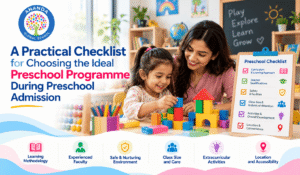
Choosing a school for a young child involves more than finding a convenient location or comparing classroom facilities. Parents want an environment where their children feel secure, develop essential skills, and become comfortable exploring new ideas. Understanding the process of Preschool Admissions can help families evaluate their options carefully and prepare for this important transition. At Ananda Global School, early education is an opportunity to establish positive learning habits, encourage curiosity, and support children’s social, emotional, and intellectual development.
1. Look Beyond First Impressions When Evaluating a School
A welcoming entrance and colourful classroom can create a positive first impression, but parents should also understand what everyday learning looks like. The quality of teacher-child interactions, classroom routines, and opportunities for exploration often provides a clearer picture of the educational environment.
Observe whether children are encouraged to ask questions, express their feelings, and participate in activities without unnecessary pressure. Teachers should communicate patiently, offer age-appropriate guidance, and recognise that children develop at different rates.
A thoughtful evaluation should consider:
- Classroom atmosphere: Is the environment organised, engaging, and comfortable for young learners?
- Teacher involvement: Do educators listen to children and respond to their individual needs?
- Learning opportunities: Are storytelling, creative activities, movement, and hands-on exploration part of the routine?
- Safety practices: Are supervision, hygiene, and emergency procedures clearly explained?
- Individual attention: How does the school support children who need additional time or encouragement?
These observations help parents look beyond appearance and understand how a school supports everyday development.
2. Understanding What Makes a School Suitable for Your Child
When evaluating a School In Ahmedabad, families should begin by identifying their child’s needs and their own expectations. Some children adapt quickly to new environments, while others benefit from gradual transitions, predictable routines, and additional reassurance.
The most suitable school is not necessarily the one with the longest list of activities. Instead, it should offer an approach that aligns with the child’s developmental stage and provides a healthy balance between structured learning and exploration.
Parents can compare their options using a simple framework.
| Evaluation factor | What parents should examine | Useful question to ask |
| Teaching approach | Balance of guided activities and play | How are concepts introduced to young children? |
| Communication | Frequency and clarity of updates | How are developmental observations shared? |
| Daily schedule | Rest, movement, learning, and breaks | Is the routine appropriate for the age group? |
| Class environment | Available space and learning materials | How do children access and use resources? |
| Practical arrangements | Timings, transport, and policies | Will the schedule work for our family? |
A school visit, discussion with educators, and careful review of admission requirements can help families make a more informed decision.
3. Preparing Children for Their First School Experience
Starting school can bring excitement as well as uncertainty. New surroundings, unfamiliar adults, and separation from caregivers may feel overwhelming for some children. Preparing them gradually can make the transition more comfortable.
Parents can introduce small changes at home before the first day. Establishing a consistent morning routine, reading stories about school, and encouraging children to manage simple tasks can help build familiarity.
It is also useful to practise everyday independence, such as putting toys away, carrying a small bag, washing hands, and asking for help when needed. These activities build confidence without turning preparation into a demanding academic exercise.
Emotional readiness deserves equal attention. Children should know that feeling nervous is normal and that trusted adults will help them settle in. Avoid comparing their adjustment with that of other children, as each child responds differently to change.
4. Comparing Educational Approaches and Long-Term Development
Families researching Schools In Ahmedabad may encounter different teaching philosophies, activity structures, and approaches to early development. Understanding these differences helps parents assess whether a programme encourages meaningful learning rather than focusing narrowly on early academic performance.
A balanced early education programme should nurture several areas of development together. Language activities encourage communication, creative projects build imagination, and collaborative games introduce cooperation. Movement-based activities support physical coordination, while simple puzzles encourage reasoning.
Parents should also examine how educators observe progress. Rather than expecting every child to achieve identical outcomes at the same time, effective early learning recognises individual strengths and identifies areas where further support may be helpful.
Ask how the school introduces early literacy and numeracy, handles differences in learning pace, and encourages children to participate. Clear answers can reveal whether the educational approach is appropriate for young learners.
5. Making the Admission Process More Manageable
Admission planning becomes easier when families gather essential information before submitting an application. Requirements and age eligibility can differ by programme, so parents should confirm current details directly with the school.
A practical preparation checklist includes:
- Confirming the eligible age group and application deadlines.
- Reviewing the documents required for registration.
- Understanding fees, payment schedules, and refund policies.
- Checking school timings and transport arrangements.
- Asking about orientation sessions and settling-in procedures.
Keep a written record of important dates and unanswered questions. This reduces last-minute confusion and allows parents to focus on whether the school is the right fit for their child.
Frequently Asked Questions
-
When should parents begin the admission process?
Start early enough to understand eligibility, deadlines, available places, and required documentation. Confirm the current schedule with the school.
-
What documents are commonly required?
Schools may request a birth certificate, photographs, parent identification, and relevant medical or previous-school records. Requirements vary.
-
Is academic ability the main measure of school readiness?
No. Communication, emotional adjustment, curiosity, and developing independence are also important considerations.
-
Should parents visit a school before applying?
Yes, when visits are available. Observing the environment and speaking with educators can help clarify expectations and teaching practices.
-
How can parents support adjustment after admission?
Maintain predictable routines, communicate calmly, acknowledge feelings, and coordinate with teachers if difficulties persist.
Conclusion
Choosing an early learning environment requires thoughtful consideration of teaching quality, emotional support, safety, practical arrangements, and individual developmental needs. Families comparing Schools In Satellite Ahmedabad should prioritise a setting that encourages curiosity, nurtures independence, and makes children feel supported as they learn. By asking informed questions and looking beyond first impressions, parents can make a confident decision that gives their child a positive foundation for the years ahead.
