
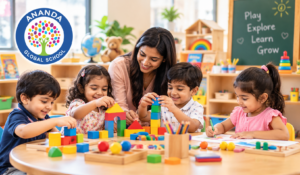
A child’s first educational experiences can shape their attitude towards learning for years to come. During the preschool stage, children begin developing communication skills, emotional awareness, coordination, and the confidence to explore unfamiliar situations. Choosing a Preschool in Satellite therefore involves more than comparing facilities or daily schedules. Parents should understand how a school encourages curiosity, supports individual development, and creates a positive environment for discovery. Ananda Global School provides a starting point for families exploring early education and considering what makes a learning environment suitable for their child’s needs.
1. Why the Early Years Need a Different Approach to Learning
Young children learn differently from older students. They understand ideas through movement, observation, repetition, conversation, and hands-on experiences. Activities that appear simple, such as arranging objects by size or describing a picture, can strengthen several developmental abilities at once.
An effective preschool programme balances guided learning with opportunities for independent exploration. Instead of expecting children to memorise information for extended periods, educators can introduce concepts through stories, games, music, creative activities, and everyday classroom interactions.
This approach supports several important areas of development:
- Language and communication: Listening, expressing needs, describing experiences, and learning new vocabulary.
- Early reasoning: Recognising patterns, comparing objects, and finding solutions to simple problems.
- Physical coordination: Developing balance, movement, and control through age-appropriate activities.
- Emotional awareness: Identifying feelings and gradually learning how to manage frustration.
- Social development: Sharing resources, cooperating with peers, and understanding group routines.
Progress may look different for every child. A supportive classroom recognises these differences while providing opportunities for steady growth.
2. What to Evaluate When Comparing Educational Options
Parents exploring the Top Schools In Ahmedabad should examine the educational experience behind the facilities. Attractive classrooms can be inviting, but the quality of teaching, classroom relationships, and daily activities provides a more meaningful indication of suitability.
Start by observing how educators interact with children. Do they encourage questions, listen patiently, and explain activities clearly? Are children given opportunities to participate, make choices, and learn from mistakes?
The following comparison can help organise a school visit.
| Area to assess | What to observe | Why it matters |
| Teaching practices | Variety of activities and teacher guidance | Supports different learning styles |
| Classroom relationships | Respectful communication and encouragement | Helps children feel secure |
| Learning materials | Books, puzzles, art supplies, and play resources | Encourages exploration |
| Health and safety | Hygiene, supervision, and emergency procedures | Supports children’s wellbeing |
| Parent involvement | Progress updates and opportunities for discussion | Builds consistency between home and school |
Parents should also ask about class sizes, educator qualifications, daily timings, and policies for children who need additional support.
3. The Role of Creativity in Building Confidence
Creative activities give children opportunities to communicate ideas before they have the vocabulary to explain everything verbally. Drawing, painting, music, storytelling, and pretend play allow them to experiment, make decisions, and express individual interests.
For example, a child creating a picture of a garden may explore colours, practise hand movements, identify familiar objects, and develop a story around the scene. The learning comes not only from the finished picture but also from the decisions and conversations involved in creating it.
Educators can support creativity by offering open-ended materials and asking questions that encourage children to think independently. Rather than insisting that every child produce an identical result, they can recognise different approaches and invite children to explain their choices.
Parents can reinforce these experiences at home through simple activities such as building with blocks, helping prepare a snack, sorting household objects, or inventing stories together. These everyday opportunities make learning relevant without creating unnecessary academic pressure.
4. Creating a Smooth Transition into Formal Schooling
Families comparing Schools In Satellite Ahmedabad should consider how early education prepares children for the next stage of their academic journey. Readiness involves more than recognising letters or counting objects. Children also benefit from developing independence, communication, attention, and the ability to participate in group activities.
A preschool can introduce these skills gradually through predictable routines and age-appropriate responsibilities. Children might learn to organise their belongings, follow simple instructions, wait for a turn, or ask an adult for assistance.
Parents can support the transition by maintaining consistent sleep schedules, reading together regularly, and talking positively about school. If a child feels anxious about separation, a calm and patient approach can help them adjust over time.
It is important to avoid comparisons with siblings or classmates. Developmental milestones are useful guides, but they do not describe every child’s progress precisely. Families should discuss persistent concerns with educators and seek professional guidance when appropriate.
5. Strengthening Learning Through Family Participation
A child’s development benefits when parents and educators communicate openly. Families can share information about interests, routines, communication preferences, and situations that may cause discomfort. Teachers can then use these observations to make classroom experiences more responsive.
Regular discussions also help parents understand what their child is practising at school and how similar skills can be encouraged at home. For instance, if children are learning to express emotions, families can model simple language for describing happiness, disappointment, or frustration.
Consistency does not mean making home feel like another classroom. Play, conversation, rest, and unstructured time remain important. The goal is to create a supportive environment in which children feel comfortable asking questions, trying unfamiliar activities, and gradually taking on new responsibilities.
Conclusion
Choosing an early learning environment requires attention to teaching practices, emotional wellbeing, creative opportunities, and individual developmental needs. Families seeking the Best preschool in satellite should prioritise a school that balances guided learning with exploration and supports children as they develop confidence and independence. By observing classrooms, asking thoughtful questions, and considering each child’s needs, parents can make a well-informed choice that establishes a positive foundation for lifelong learning.
Frequently Asked Questions
- What should a good preschool programme include?
It should offer age-appropriate language activities, creative play, movement, social interaction, and opportunities to explore early concepts.
- How can parents assess classroom quality?
Observe teacher-child interactions, available resources, supervision practices, and how children are encouraged to participate.
- Is play important for academic development?
Yes. Play can strengthen language, reasoning, coordination, problem-solving, and cooperation.
- How can children become more independent before school?
Encourage simple tasks such as organising toys, washing hands, choosing activities, and asking for help when needed.
- How can parents support progress at home?
Read together, discuss daily experiences, encourage imaginative play, and maintain regular communication with educators.
