
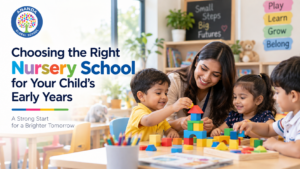
Choosing a school for the early years is an important decision because a child’s first experiences with education can influence their attitude towards learning, communication, and independence. Parents often compare teaching methods, classroom environments, safety measures, activities, and opportunities for social development before making a choice. While exploring the Best Nursery Schools In Ahmedabad, families may come across options such as Ananda Global School and other established educational institutions. Understanding what to evaluate can help parents select an environment that feels appropriate for their child’s developmental stage and individual needs.
What Children Need During Their First School Years
The early years provide an important foundation for developing curiosity, communication, independence, and social confidence. Children learn differently from older students, so their educational environment needs to reflect their developmental stage.
Rather than concentrating solely on academic tasks, a balanced programme can introduce learning through stories, games, art, music, movement, conversations, and hands-on activities. These experiences allow children to develop skills while remaining actively involved in the learning process.
Parents can look for an environment that provides:
- Opportunities for exploration and creative expression
- Age-appropriate activities and expectations
- Positive interactions between teachers and children
- Predictable routines that help children feel secure
- Opportunities to develop communication and social skills
- A comfortable balance between guided learning and independent activity
The objective should be to help children become comfortable with learning rather than making early education unnecessarily competitive.
Planning Ahead for the Admission Process
For many families, Preschool Admissions involve comparing several schools at the same time. Having a clear set of priorities can make this process easier.
Start by identifying practical requirements such as school timings, transportation, daily routine, and communication methods. Then consider educational factors, including the curriculum, classroom activities, teacher interaction, and approach to individual learning needs.
A school visit can provide information that a brochure or website may not. Parents can observe how teachers speak with children, whether students appear engaged, and whether classrooms feel welcoming and organised.
It is also sensible to ask how the school helps children who are nervous about separating from their parents. A gradual adjustment period can be valuable because children do not all become comfortable with a new environment at the same pace.
Looking at Development Beyond Academic Skills
Early education encompasses several areas of development that work together. Language and communication help children express ideas and needs. Physical activities contribute to coordination and body awareness. Creative experiences allow them to experiment, imagine, and communicate in different ways.
Social development is equally important. Regular interaction with peers gives children opportunities to practise sharing, cooperation, listening, and taking turns. They also begin learning how to manage disagreements and respond to different perspectives.
Emotional development deserves attention as well. Young children may experience excitement, frustration, hesitation, or separation anxiety. Responsive adults can help them understand these feelings while gradually building confidence.
Parents should therefore evaluate whether the educational approach recognises the whole child instead of measuring readiness only through early academic performance.
What to Evaluate Before Making a Choice
When comparing a Nursery School In Ahmedabad, it helps to consider both educational quality and everyday practicality. The following areas can provide a useful framework during school visits and conversations with staff.
| Area to Evaluate | Questions Parents Can Consider |
| Learning approach | Are activities suitable for the child’s age and developmental stage? |
| Classroom experience | Do children have opportunities to participate, explore, and communicate? |
| Teacher interaction | Are teachers patient, attentive, and respectful toward children? |
| Daily routine | Does the schedule provide a healthy balance of structured and flexible activities? |
| Parent communication | How are children’s progress and classroom experiences shared with families? |
| Transition support | How does the school help children adjust to a new routine? |
No single factor should determine the decision. Instead, parents can consider how these elements work together and whether the overall environment matches their child’s personality and needs.
Practical Questions to Ask During a School Visit
A school visit is an opportunity to gather specific information rather than simply form an impression. Parents can ask about class sizes, teacher qualifications, daily activities, safety procedures, attendance expectations, and how children are supported when they need additional reassurance.
It can also be useful to understand how progress is observed. At this age, development may be reflected through participation, communication, independence, creativity, and social interaction rather than conventional examinations.
Families should also consider the practical aspects of maintaining the routine over several years. A school that works well with the family’s schedule and expectations can make everyday education more manageable for both parents and children.
Conclusion
Choosing an early learning environment is ultimately about finding a suitable balance between educational philosophy, developmental needs, practical requirements, and a child’s comfort. Parents comparing Schools In Ahmedabad can use these factors to assess Ananda Global School thoughtfully rather than relying on a single feature or first impression. A careful school visit, meaningful questions, and attention to the child’s individual needs can help families make a well-informed choice and create a positive beginning to their child’s educational journey.
FAQs
What should parents consider when choosing an early learning school?
Consider the teaching approach, classroom environment, teacher interaction, safety, daily routine, communication with parents, and the child’s individual needs.
Is play-based learning suitable for young children?
Play can support communication, creativity, problem-solving, social development, and exploration when activities are intentionally planned for children’s developmental stages.
How can parents prepare a child for starting school?
Establish simple routines, discuss school positively, encourage independence with everyday tasks, and allow the child time to become familiar with the idea of a new environment.
What questions should parents ask teachers?
Parents can ask about classroom routines, learning activities, adjustment support, communication methods, and how teachers observe children’s progress.
Should academic performance be the main selection criterion?
For very young children, broader developmental progress is important. Communication, social skills, confidence, creativity, independence, and emotional adjustment should also be considered.
