
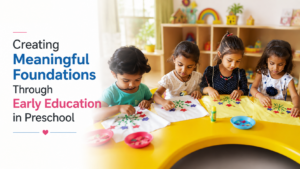
Early childhood education provides children with their first structured experiences of learning outside the home. Families considering a Preschool in Vejalpur often look at more than academic preparation. The classroom environment, teaching approach, daily routines, social interaction, safety practices, and opportunities for creative expression can all influence a child’s early development. A well-planned preschool experience should allow children to explore ideas, communicate comfortably, develop independence, and gradually understand how to participate in a group setting. These early experiences can establish habits and attitudes that remain valuable as children move towards formal schooling.
What the Top 10 CBSE Schools Have in Common
Parents researching the Top 10 CBSE Schools In Ahmedabad may encounter institutions with different educational philosophies, facilities, activities, and approaches to student development. Rather than relying only on rankings or general reputation, families can consider whether a school’s educational environment matches their child’s needs and stage of development.
When evaluating an institution, parents can pay attention to:
- Teaching methodology and classroom practices
- Opportunities for creative and practical learning
- Teacher interaction with students
- Communication between school and parents
- Co-curricular and physical activities
- Safety, hygiene, and classroom organisation
The transition from preschool to formal education is gradual. Children benefit when foundational skills such as communication, listening, coordination, and cooperation are developed alongside early academic concepts.
How Preschool Experiences Shape Child Development
Preschool is an important stage because children are developing rapidly across several areas at the same time. Activities designed for their age can support language development, physical coordination, emotional awareness, social interaction, and early reasoning skills.
A classroom can introduce these skills through stories, games, music, art, movement, practical activities, and guided conversations. Such experiences give children opportunities to observe, participate, experiment, and communicate.
| Developmental Area | Suitable Preschool Experiences |
| Language | Storytelling, conversations, rhymes |
| Motor skills | Drawing, building, movement activities |
| Social development | Group games and cooperative tasks |
| Creativity | Art, music, imaginative play |
| Early reasoning | Sorting, matching, counting, simple puzzles |
A balanced programme can therefore prepare children for future learning without placing unnecessary academic pressure on them.
Encouraging Independence Through Everyday Activities
Children gradually develop confidence when they are given opportunities to participate in age-appropriate responsibilities. Preschool routines can introduce simple tasks that encourage children to make choices, follow instructions, and take care of their belongings.
Teachers can support independence by allowing children to:
- Choose between suitable activities
- Organise their classroom materials
- Participate in group discussions
- Complete simple tasks independently
- Help with classroom routines
- Express preferences and ideas respectfully
These experiences can strengthen children’s sense of responsibility while teaching them how to function within a shared environment. Mistakes can also become useful learning opportunities when children are encouraged to try again rather than being discouraged.
Selecting a Preschool in Jodhpur Ahmedabad
Families exploring a Preschool in Jodhpur Ahmedabad can consider several practical and educational factors before making a decision. Location and daily travel arrangements are useful considerations, but the quality of children’s experiences within the classroom is equally important.
Parents may find it helpful to visit prospective schools and observe how teachers communicate with children. Questions about daily routines, learning activities, parent communication, classroom organisation, and safety procedures can provide a clearer picture of the environment.
Other aspects worth considering include:
- Age-appropriate classroom activities
- Teacher-child interaction
- Indoor and outdoor learning opportunities
- Opportunities for group participation
- Communication regarding children’s progress
- Clean and organised learning spaces
Every child develops differently. An environment that allows teachers to understand individual learning patterns can help children participate more comfortably and confidently.
Preparing Children for Formal Schooling
Preschool can establish practical habits that support children as they enter primary education. Learning to follow routines, listen to instructions, communicate with classmates, wait for a turn, and complete simple activities can make future classroom experiences more manageable.
Parents can reinforce these skills at home through everyday interactions. Reading stories together, encouraging children to put away their belongings, involving them in simple household responsibilities, and allowing them to make appropriate choices can strengthen independence.
The objective is not to recreate a formal classroom at home. Instead, consistent routines and positive conversations can help children associate learning with curiosity and discovery.
Conclusion
Early education is about helping children become curious, confident, communicative, and comfortable with learning. Families can make informed choices by considering teaching practices, developmental activities, classroom interactions, safety, and the child’s individual needs rather than focusing on a single measure of educational quality. As children progress from preschool towards primary education, these foundational experiences can support their adjustment to increasingly structured learning environments. Within the broader landscape of Schools In Ahmedabad, Ananda Global school can be considered as part of the educational conversation surrounding meaningful learning experiences and child development.
FAQs
- What should parents look for in a preschool?
Parents can consider teaching practices, safety, teacher interaction, classroom routines, activities, communication, and opportunities for social and creative development. - Why is play important during early education?
Play allows children to explore ideas, practise communication, develop coordination, solve simple problems, and interact with peers in an age-appropriate way. - How can parents assess a preschool before admission?
A school visit can help parents observe classroom interactions, understand daily schedules, ask about teaching methods, and review practical arrangements. - Should preschool children be taught formal academic concepts?
Foundational concepts can be introduced through age-appropriate activities, but early education should also address social, emotional, creative, and physical development. - How can families support preschool learning at home?
Reading, storytelling, simple routines, creative activities, and opportunities for children to complete age-appropriate tasks can reinforce learning habits.
