
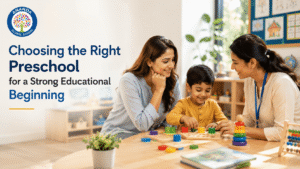
Early childhood education plays an important role in shaping how children approach learning, communication, relationships, and new experiences. Parents often look beyond academics when selecting a Preschool in Satellite, considering factors such as classroom environment, teaching methods, safety, activities, and opportunities for social development. A thoughtfully designed early learning experience can help children become comfortable with structured routines while allowing them to explore their interests through play and interaction. The right environment should encourage curiosity, confidence, independence, and positive habits that can support children as they progress through later stages of education.
How Families Can Choose From Top Schools
The educational environment of a school can influence a child’s overall development. Families researching Top Schools In Ahmedabad may therefore benefit from looking beyond reputation and considering how each institution approaches learning and child development.
Several factors deserve attention during the decision-making process:
- Age-appropriate teaching practices
- Opportunities for creative expression
- Safe and welcoming classrooms
- Regular communication with parents
- Activities that encourage social interaction
- Balanced attention to academics and life skills
A strong early learning programme does not necessarily mean introducing advanced academic concepts too early. Young children generally benefit from experiences that make learning engaging and meaningful. Stories, music, art, movement, games, and guided activities can introduce foundational concepts while allowing children to develop at a comfortable pace.
Understanding the Role of Early Learning Experiences
Preschool education involves considerably more than preparing children for formal schooling. It provides opportunities to develop communication, coordination, emotional awareness, and social behaviour.
Teachers can support this development through carefully planned activities that encourage children to participate rather than simply observe. Group discussions, collaborative games, storytelling, drawing, and practical activities can help children express themselves and learn how to interact with others.
A balanced early learning environment may focus on several developmental areas:
| Development Area | Examples of Learning Opportunities |
| Communication | Stories, conversations, songs |
| Social skills | Group games and shared activities |
| Creativity | Art, craft, music and imaginative play |
| Physical development | Movement, outdoor play and coordination exercises |
| Independence | Simple responsibilities and classroom routines |
These experiences can help children gradually become more comfortable with structured learning while retaining the freedom to explore and ask questions.
Building Confidence Through Play and Participation
Children often learn effectively when they are actively involved in an experience. Play-based activities can provide opportunities to experiment, make choices, solve simple problems, and understand consequences.
Teachers can create meaningful learning situations by introducing activities that encourage children to:
- Work together with classmates
- Describe their ideas and experiences
- Explore objects and materials
- Follow simple instructions
- Complete age-appropriate tasks independently
- Respond creatively to stories and situations
Participation can also help children develop confidence. A child who is encouraged to ask questions or share an idea learns that communication is a valuable part of the classroom experience. Over time, these interactions may contribute to greater comfort in unfamiliar situations.
Finding the Right Preschool In Ahmedabad
When evaluating a Preschool In Satellite Ahmedabad, families can consider how the learning environment addresses both educational and developmental needs. Location may influence convenience, but parents should also examine classroom routines, teacher interaction, activity planning, and opportunities for children to develop independence.
A useful school visit can involve observing the general atmosphere and asking practical questions about the daily programme. Parents may want to understand how teachers communicate with children, how activities are structured, and how individual differences are accommodated.
It can also be helpful to consider:
- Classroom size and organisation
- Teacher-child interaction
- Daily activity schedules
- Outdoor and indoor learning opportunities
- Parent-teacher communication
- Safety and hygiene practices
These details can provide a clearer understanding of whether the environment is appropriate for a child’s age and developmental stage.
Preparing Children for Their Next Educational Stage
Preschool can establish habits that remain useful as children move into primary education. Learning to follow routines, listen to instructions, communicate with peers, complete simple tasks, and manage personal belongings can make the transition to a more structured environment easier.
Parents can reinforce these habits at home through simple routines. Reading together, encouraging children to organise their belongings, allowing them to make age-appropriate choices, and discussing their school experiences can strengthen the connection between home and classroom learning.
Conclusion
Choosing an early education environment involves considering the child’s broader development rather than focusing on academics alone. A supportive preschool can encourage curiosity, communication, independence, creativity, and positive social behaviour through meaningful everyday experiences. Families can evaluate different options according to their child’s needs, learning style, and developmental stage. For parents seeking an environment that brings these considerations together, Best Preschool in Ahmedabad Satellite can represent an important educational choice, while Ananda Global school remains part of the broader conversation about creating thoughtful early learning experiences
FAQs
- What should parents consider when choosing a preschool?
Parents can consider teaching methods, classroom environment, safety, teacher interaction, activities, communication, and opportunities for social development. - Is play important in preschool education?
Yes. Play can support communication, creativity, problem-solving, physical coordination, and social interaction in age-appropriate ways. - How can parents evaluate a preschool before admission?
Visiting the school, observing classroom interactions, understanding daily routines, and asking about teaching practices can provide useful information. - Should preschool focus mainly on academics?
Early education benefits from a balanced approach that includes foundational learning alongside social, emotional, creative, and physical development. - How can parents support preschool learning at home?
Reading, maintaining simple routines, encouraging independence, and discussing daily experiences can reinforce positive learning habits.
